The King and the Eclipse
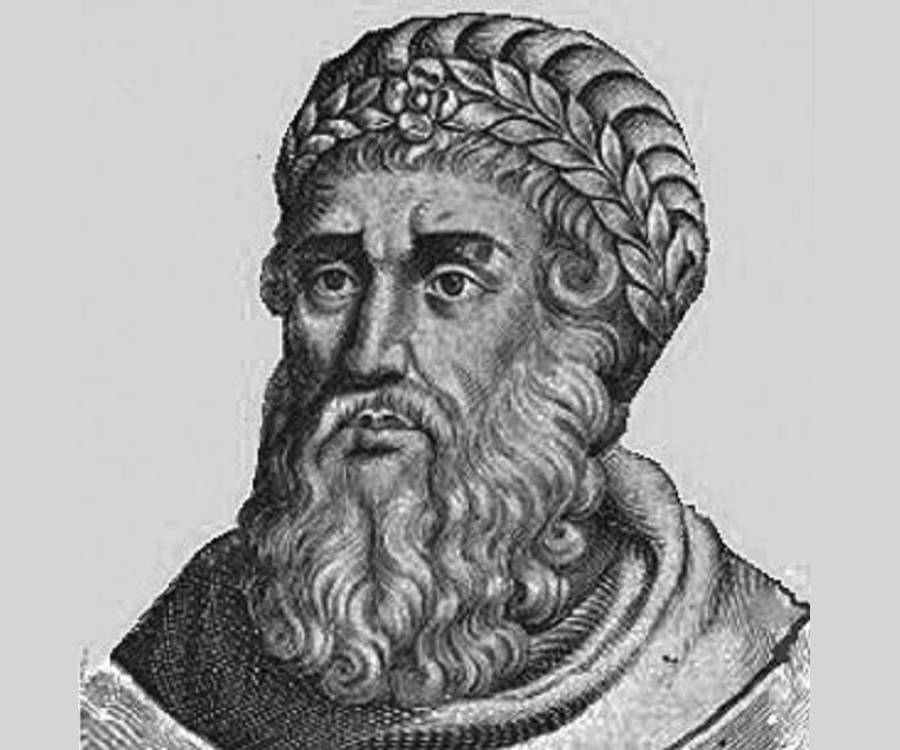
Historian Flavius Josephus wrote that Herod died between a lunar eclipse and a Jewish Passover. Gospels Matthew and Luke report that King Herod was alive when Jesus of Nazareth was born in Bethlehem.
Identifying the end of King Herod’s life would determine the birth year of Jesus of Nazareth. While some consider this information trivial, others find it important.
Without formal or reliable Western calendars, establishing the date of Herod’s death requires piecing together such clues as the reigns of Tiberius, and his sons; the Battle of Actium; the Jewish religious calendar; astronomy data; history accounts; etc.[1]
Herod was officially designated by Caesar Augustus as King, then sanctioned by the Roman Senate to rule Judea. According to Josephus, King Herod ruled for 37 years until his death that occurred between these bookend events:
“But Herod deprived this Matthias of the high priesthood, and burnt the other Matthias, who had raised a sedition with his companions, alive. And that very night, there was an eclipse of the moon.”[2]
“…and when the public morning for the king was over…at the feast of unleavened bread, which was now at hand, and is by the Jews called the Passover…” – Antiquities[3]
Lunar factual data is obtained via the science of astronomy provided by NASA and the Jewish Passover which always occurs with the first full moon of the year. Determining the actual year of Herod’s death is dependent upon both a lunar eclipse and another factor, the rule of Philip, Herod’s son.
Philip was awarded a tetrarchy by Caesar Augustus as part of the inheritance of King Herod.[4] According to the Gutenberg-printed Antiquities, Philip ruled for 37 years when he died in “the twentieth year of the reign of Tiberius”(Herod in the excerpt is Herod Antipas):[5]
“…Philip, Herod’s brother, departed this life, in the twentieth year of the reign of Tiberius after he had been tetrarch of Trachonitis, and Gaulonitis, and of the nation of Bataneana also thirty-seven years.” – Josephus (*printed)
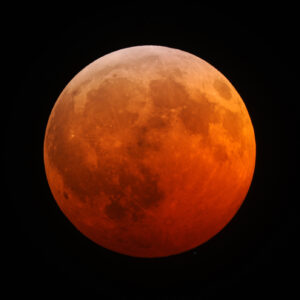
An important factor in the 4 BC timeline date for historians is a lunar eclipse. NASA’s astronomy lunar eclipse data for Jerusalem confirms a partial eclipse with less-than-half coverage lunar occurred on March 13, 4 BC, between 1:32 and 3:50 AM with the following Passover falling on April 10th.[6]
Thus, secular history marks Herod’s death in 3 BC strongly supported by the partial lunar eclipse in 4 BC. It seems relatively simple – from Tiberius’s twentieth year of rule (14 + 20), subtract the 37 years of Philips rule and it lands in 3 BC.[7]
Aside from the partial lunar eclipse in 4 BC, finding other known secular historical events corroborating this timeline has proven to be challenging. Examples: Caesar Augustus taking a census and Quirinius governing in Syria in 4 BC.[8]
NASA’s astronomy data provides a game-changing fact. January 9, 1 BC, a full lunar eclipse over Jerusalem began at 10:22 PM spanning to 3:53 AM, January 10. Passover in 1 BC was observed on April 6, twelve and half weeks later.[9]
Josephus described in detail events that transpired between the lunar eclipse and the Passover, especially after the King’s death. The question is whether all the events described by Josephus could have taken place in four weeks between the Kings death and the Passover or if 12 ½ weeks is more realistic.
When word of the King’s death reached abroad, many traveled to Herod’s funeral in Jericho from throughout Judea and from other countries that included foreign dignitaries and militaries. The following funeral procession lasted for many days to Herod’s final resting place in Herodium 30 miles away.
One of Herod’s sons, Archelaus, extended the mourning period after his interment to seven days and then gave a feast for all the people in Judea before the upcoming Passover. When the Passover festival occurred days later, Archelaus sailed away to Rome with his family escaping the civil unrest.
Further upending the 4 BC date reckoning was Biblical hobbyist David Beyer who traveled to various libraries around the world that held older handwritten copies of Antiquities. He discovered that all handwritten copies originally stated Philip died in the 22nd year of the reign of Tiberius.[10]
Beyer’s discovery adjusts the beginning of Philip’s rule to the years of 2-1 BC and promoted the calculus of the death of King Herod to 1 BC. The discovery also aligns with other historical information.
In 36 AD, Aretas and Antipas went to war “when all of Herod’s [Antipas] army was destroyed by the treachery of some fugitives, who, though they were of the tetrarchy of Philip, joined with Aretas’s army.”[11] After Tiberius died in 36 AD, Agrippa was given Philip’s tetrarchy by Caligula when, logically, it is unlikely the governance tetrarchy would remain vacated for years.
Additionally, archeological, historical and astronomy records tracing to 2 BC coincide with other historical timeline events: the Silver Anniversary of Caesar Augustus and his Pater Patriae registration decree; archeological discoveries of Quirinius governing in Syria; and the Battle of Actium marking the beginning date of Herod’s reign.[12]
A lunar eclipse is the key to both scenarios. A partial lunar eclipse in 4 BC followed by the Passover less than 4 weeks later vs. a full lunar eclipse in 1 BC with the Passover 12½ weeks later.
Did Herod die in 4 BC or 1 BC?
Updated January 17, 2026.

This work is licensed under a Creative Commons Attribution-NonCommercial-NoDerivatives 4.0 International License.
REFERENCES:
[1] Livius.org. Ed. Jona Lendering. 2017. <http://www.livius.org/he-hg/herodians/herod_the_great01.html> “The Actium Project.” New World Encyclopedia. The University of South Florida and the Greek Ministry of Culture. Dir. William M. Murray. Research Project. 1997. <http://luna.cas.usf.edu/~murray/actium/brochure.html> Chesser, Preston. “The Battle of Actium.” Ohio State University. 2002. <http://ehistory.osu.edu/articles/battle-actium> Gertoux, Gerard. “Herod the Great and Jesus: Chronological, Historical and Archaeological Evidence.” Academia.edu. n.d. <https://www.academia.edu/2518046/ Gertoux, Gerard. “Dating the death of Herod.”2015 Academia.edu. <http://www.academia.edu/2518046/Dating_the_death_of_Herod/a> “World History 50-0 BC.” HistoryCentral.com. MultiEducator, Inc. n.d. <http://www.historycentral.com/dates/50bc.html> Jewish Encyclopedia. 2011. <http://www.jewishencyclopedia.com/articles/7598-herod-> “Tiberius.” Encyclopædia Britannica. 2023. <https://www.britannica.com/biography/Tiberius> Wolfram, Chuck. “The Herodian Dynasty.” 2004. <http://web.archive.org/web/20151013221102/http://freepages.history.rootsweb.ancestry.com/~cwolfram/herod> Martin, Ernest L. The Star of Bethlehem – The Star That Astonished the World. 2nd Ed. 2003. Chapter 13. A.S.K. (Associates for Scriptural Knowledge. <://web.archive.org/web/20170917115234/http://www.askelm.com/star/star015.htm> Bunson, Matthew. Encyclopedia of the Roman Empire. “Astronomy.” 2002. <https://archive.org/details/isbn_9780816045624> San José, Juan Antonio Revilla. “On the Year of Herod’s Death.” A partial translation from “La Fecha de Muerte de Herodes y La Estrella de Belén.” pp 14, 140. 1999. Astrology of the New Centaurs. <http://www.expreso.co.cr/centaurs/steiner/herod.html> “Tiberius.”BBC. 2014. <http://www.bbc.co.uk/history/historic_figures/tiberius.shtml>
[2] Josephus, Flavius. Antiquities of the Jews. Trans. and commentary. William Whitson. The Complete Works of Josephus. Book XVII, Chapter VI.4. 1850. <http://books.google.com/books?id=e0dAAAAAMAAJ&printsec=frontcover&source=gbs_ge_summary_r&cad=0#v=onepage&q&f=false>
[3] Josephus. Antiquities. Trans. and commentary. William Whitson. The Complete Works of Josephus. Book XVII, Chapter IX.3. Josephus, Flavius. Wars of the Jews. Trans. and commentary. William Whitson. The Complete Works of Josephus. Book II, Chapter I.2. 1850. <http://books.google.com/books?id=e0dAAAAAMAAJ&printsec=frontcover&source=gbs_ge_summary_r&cad=0#v=onepage&q&f=false>
[4] Josephus. Antiquities. Book XVII, Chapter XI.4. Josephus. Wars. Book II, Chapter 6.3.
[5] Josephus. Antiquities. Book XVIII, Chapters IV.6. (printed copy).
[6] Espenak, Fred. “Javascript Lunar Eclipse Explorer.” NASA Eclipse Website. n.d. Asia and Asia Minor – Jerusalem, Israel. Century Selection -0001 – 0100. <https://eclipse.gsfc.nasa.gov/JLEX/JLEX-AS.html> Total Lunar Eclipse. Pilot&Today. image. 2014. <https://cdn.steamboatpilot.com/wp-content/uploads/sites/8/2017/06/TotalLunarEclipse_122110.jpg>
[7] Villalba i Varneda, Pere. The Historical Method of Flavius Josephus. 1986. p14, pt #8. <http://books.google.com/books?id=kdUUAAAAIAAJ&lpg=PA14&ots=2ek7SgCy2c&dq=josephus%2C%20battle%20of%20actium%2C%20herod&pg=PA14#v=onepage&q=josephus,%20battle%20of%20actium,%20herod&f=false> Schaff, Philip. “Chronology of the Life of Christ.” History of the Christian Church, Volume I: Apostolic Christianity. A.D. 1-100. Chapter 2. 1890. Christian Classics Ethereal Library. 2005. <http://www.ccel.org/ccel/schaff/hcc1.i.II_1.16.html> Sieffert, F. “Census.” The New Schaff-Herzog Encyclopedia of Religious Knowledge. Vol. II: Basilica – Chambers. 1952. <http://www.ccel.org/s/schaff/encyc/encyc02/htm/iv.vi.ccxxx.htm> “Philip the Tetrarch.” Fandom. n.d. <https://bible.fandom.com/wiki/Philip_the_Tetrarch> Bernegger, P.M. “Affirmation of Herod’s Death in 4 B.C.” Journal of Theological Studies Vol. 34, no 2, pp 526-531. 1983. Schurer, Emil. A History of the Jewish People in the Time of Jesus Christ. Volume 1. 1890. <http://books.google.com/books?id=BRynO3W9FPcC&pg=PP1#v=snippet&q=Tiberius&f=false>
[8] Davis, John D. “Quirinius” (Quirinus), cwui-rin’i-us, Publius Sulpicious.” The New Schaff-Herzog Encyclopedia of Religious Knowledge. Vol. IX: Petri – Reuchlin. 1953. <http://www.ccel.org/s/schaff/encyc/encyc09/htm/iv.vi.xii.htm> Ramsay, William M. “Was Christ Born in Bethlehem?” Chapter 11. 2010. <http://biblehub.com/library/ramsay/was_christ_born_in_bethlehem/index.html> Villalba i Varneda, Pere. The Historical Method of Flavius Josephus. The Historical Method of Flavius Josephus.” pp 15 -16, pts. 8-10.
[9] Espenak. “Javascript Lunar Eclipse Explorer.” NASA Eclipse Website. n.d. Asia and Asia Minor – Jerusalem, Israel. Century Selection -0001 – 0100. Unraveling the Twenty-Second Year of Tiberius.” Chronos, Kairos, Christos II. Ed. Jerry Vardaman. 1998. <http://books.google.com/books?id=mWnYvI5RdLMC&lpg=PP1&dq=isbn%3A0865545820&pg=PA85#v=snippet&q=beyer&f=false> Jachowski, Raymond. Academa.Edu. “The Death of Herod the Great and the Latin Josephus: Re-Examining the Twenty-Second Year of Tiberius.” n.d. <https://www.academia.edu/19833193/The_Death_of_Herod_the_Great_and_the_Latin_Josephus_Re_Examining_the_Twenty_Second_Year_of_Tiberius>
[10] Beyer, David W. “Josephus Reexamined: Unraveling the Twenty-Second Year of Tiberius.” Chronos, Kairos, Christos Kidger, Mark R. “The Date of Passover 11BC – 10AD.” Mark Kidger`s Comet and Asteroid Observing Home Page. n.d. http://www.observadores-cometas.com/cometas/Star/Passover.html> “Unraveling the Twenty-Second Year of Tiberius.” Chronos, Kairos, Christos II. Ed. Jerry Vardaman. 1998. <http://books.google.com/books?id=mWnYvI5RdLMC&lpg=PP1&dq=isbn%3A0865545820&pg=PA85#v=snippet&q=beyer&f=false> Jachowski. Academia.Edu. “The Death of Herod the Great and the Latin Josephus: Re-Examining the Twenty-Second Year of Tiberius.” Kidger. “The Date of Passover 11BC – 10AD.
[11] Josephus. Antiquities. Book XVII, Chapter VI.4; Book XVIII, Chapter V.1. Josephus. Wars. Book II, Chapter IX.5.” “Herod Antipas.” Britannica Encyclopedia. 2022. <https://www.britannica.com/biography/Herod-Antipas> “Aretas.” Bible History. 2022. <https://bible-history.com/links/aretas-1067>
“Antipas and Rome.” Bible-History. n.d. <https://bible-history.com/herod-antipas/antipas-and-rome> “Aretas.” Encyclopedia.com. n.d. <https://www.encyclopedia.com/reference/encyclopedias-almanacs-transcripts-and-maps/aretas>
[12] Gertoux, Gerard. “Dating the two Censuses of Quirinius.” 2018. Academia.edu. <http://www.academia.edu/3184175/Dating_the_two_Censuses_of_Quirinius> Josephus. Antiquities. Book XVII. Chapter VII. Josephus. Wars. Book I, Chapter XXXIII; Book II, Chapter XIX. “Augustus.” UNRV History |The Roman Empire. United Nations of Roma Victrix. 2017. <http://www.unrv.com/fall-republic/augustus.php