Zechariah’s Donkey Prophecy


Zechariah’s Messiah prophecy focused on a donkey is one of those prophetic rarities that is very specific. More precise than even the Micah prophecy foretelling the future Ruler of Israel would come from Bethlehem Ephrathah.[1]

Zech 9:9 “Rejoice greatly, O daughter of Zion! Shout, O daughter of Jerusalem! Behold, your King is coming to you; He is just and having salvation, Lowly and riding on a donkey, a colt, the foal of a donkey.”(NKJV)

Straightforward and to the point, Jewish sage Rabbi Rashi commented on the prophecy:  “It is impossible to interpret this except as referring to the King Messiah.”[2] 

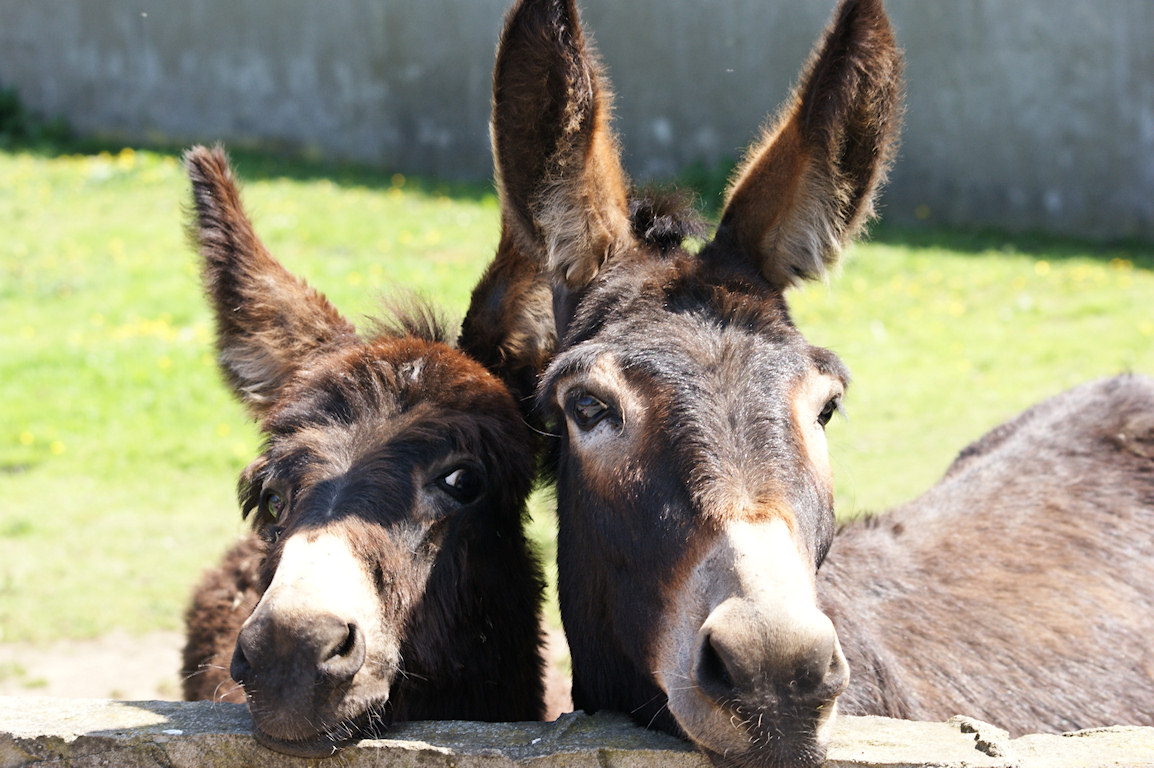
Not just any lowly donkey, it was prophesied to be a colt, a foal which is a male under a year old. At that age, the colt foal would be unridden, unbroken.

Donkeys have a reputation for their unruly and difficult behavior, even after being broken, especially true when they are in unfamiliar or frightening scenarios.[3] Yet the future King of Israel was prophesied by Zechariah to enter Jerusalem riding one such donkey colt foal.

Written between 520 – 518 BC, the prophecy was issued decades after the last king of Israel, Jeconiah, sat on the Throne of David when Jeconiah was taken captive by Nebuchadnezzar’s army in 597 BC.[4] Last of the sitting Jewish Kings, he was deported to Babylon along with “the most distinguished men of the land, and the most valuable treasures of the Temple and the palace.”[5]

Successors of the Babylonian empire, Persian rulers Cyrus the Great, Darius the Great and King Artaxerxes, issued decrees to rebuild the Temple in Jerusalem.[6] Additional decrees were necessary because political shenanigans by enemies of Israel attempted to thwart the rebuilding effort.

Scrolling forward five centuries sets the stage when Jesus of Nazareth had reached the end of his 3-year ministry.[7] Saturday, the night before entering Jerusalem for the last time, Jesus attended a dinner event at the home of Simon the leper in Bethany where attendance included the 12 Disciples and siblings Martha, Mary and Lazarus.[8]

Sunday, the next day, began the shortened week with a special Passover celebration. Approaching was the day before Passover described in John as a “high,” or “special” Sabbath, depending on the translation.[9]

One of the Disciples asked Jesus where they would be eating the upcoming Passover meal in Jerusalem? He did not answer the question directly and gave no specific information, just clues.

Matthew and John Gospel accounts report that Jesus had instructed two Disciples, identified as Peter and John, to go into Jerusalem to find a mother donkey with its colt and bring them both back to him. Had Jesus wanted only a donkey to ride, he would have been expected to instruct the pair of Disciples to simply find a donkey to bring back home.

Finding a mother donkey with a foal colt made the search much more challenging. Jesus had instructed them that if anyone were to ask why they were taking the donkeys, they were to say, “The Lord has need of it.”[11]

Aimlessly entering the big city looking for the clues Jesus had given to them, Peter and John found a tethered mother donkey with its colt.[10] As they untied it, a man asked why they were taking his donkeys?
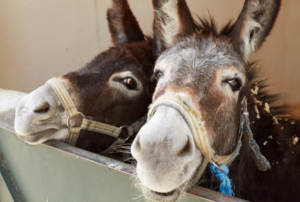
Answering as instructed, two disciples were then led by the man along with the donkeys to a house with an upper room prepared for the Passover. After they viewed the room, the owner allowed the two Disciples to take the two donkeys back to Jesus.

Entering Jerusalem for the last time, all four Gospel authors wrote about that Sunday when Jesus rode into the city seated on a donkey colt.[12] Jewish Encyclopedia cites the description in John “which has the story preserved in its original form” describing the crowd shouting “Hosanna.”[13]

MT 21:6-9 “The disciples went and did as Jesus had instructed them. They brought the donkey and the colt and placed their cloaks on them for Jesus to sit on. A very large crowd spread their cloaks on the road, while others cut branches from the trees and spread them on the road. The crowds that went ahead of him and those that followed shouted, “Hosanna to the Son of David!” “Blessed is he who comes in the name of the Lord!” “Hosanna in the highest heaven!”(NIV)

Less than a week before his crucifixion, Jesus made his final entry into Jerusalem riding on a donkey colt precisely matching the Zechariah 9:9 Messiah prophecy. In Christianity, the Sunday event the weekend before Easter is celebrated as “Palm Sunday.”[14]

Since Jesus entered Jerusalem for the last time riding on a donkey colt, was the Zechariah Messiah prophecy fulfilled or was that event merely a coincidence?


Updated January 5, 2026.

Creative Commons License

This work is licensed under a Creative Commons Attribution-NonCommercial-NoDerivatives 4.0 International License.

REFERENCES:

[1] CR Micah 5:1(2).
[2] Zechariah 9:9. Complete Jewish Bible with Rashi Commentary. Chabad.org. 2021. <https://www.chabad.org/library/bible_cdo/aid/16213/showrashi/true
[3] Luke 19:35. “Understanding Donkey Behavior.” The Donkey Sanctuary. 2018. <https://www.thedonkeysanctuary.org.uk/sites/sanctuary/files/document/142-1404405754-donkey_health_and_welfare_19.pdf>
[4] Ryrie Study Bible. Ed. Ryrie Charles C. Trans. New American Standard. 1978. “Introduction to the Book of Zechariah.”
[5] “Captivity, or Exile, Babylonian.” Jewish Encyclopedia. 2011. < http://www.jewishencyclopedia.com/articles/4012-captivity>
[6] Ezra 1:1-3, 4:4-6, 6:14-15; Nehemiah 6:15; 12:45; Ezekiel 1:2-3; 6:7,12; 7:12-13, 23, 26. Josephus, Flavius. Antiquities of the Jews. 1850. Book XI, Chapter II. The Complete Works of Josephus. Trans. Commentary by William Whitson. < http://books.google.com/books?id=e0dAAAAAMAAJ&printsec=frontcover&source=gbs_ge_summary_r&cad=0#v=onepage&q&f=false > “Cyrus the Great.” Encyclopædia Britannica. 2018. <https://www.britannica.com/biography/Cyrus-the-Great>  “Darius I.” Encyclopædia Britannica. 2021. <https://www.britannica.com/biography/Darius-I>  “Building the Second Temple.” My Jewish Learning. 2019.  <https://www.myjewishlearning.com/article/second-templer>  Cohney, Shelley. The Jewish Temples: The Second Temple.” Jewish Virtual Library. 2019. <https://www.jewishvirtuallibrary.org/the-second-temple>
[7] CR Matthew 23:19-39. Luke 13:31-35. I Kings 18:13-15; 19:14. 2 Chronicles 24:19-22; Jeremiah 26:7-16, 18-19, 20-23; 38:1-13.>
[8] Matthew 23:37-39. Luke 13:31-35.
[9] John 12:1-2, 4. CR Matthew 26:6; Mark 11:1, 14:3; Luke 10:38-39, 19:29.
[10] John 19:31. BibleHub.com. 2021. <https://biblehub.com/john/19-31.htm>  CR Mark 15:42.  “Donkeys.” Spana. photo. n.d. <http://3.bp.blogspot.com/-Q6u66St0FLo/TtOPYk1j-9I/AAAAAAAAEjI/PI95dFfdxDU/s1600/donkeys.jpg>
[11] Luke 19:28-37. CR Matthew 21:1-7.
[12] Matthew 21:7; Mark 11:7; Luke 19:28; John 12:1.
[13] “Hosanna.” Jewish Encyclopedia. 2021. <https://jewishencyclopedia.com/articles/7893-hosanna>
[14] “Palm Sunday.” Encyclopædia Britannica. 2021. <https://www.britannica.com/topic/Palm-Sunday>
 

Psalms 22 – a Catch 22 Crucifixion Prophecy


Psalms 22 is retrospectively viewed by Christians as a foreshadowing or a prophecy consistent with Isaiah’s and Zechariah’s Messiah prophecies. Some say it is neither, rather a falsehood.[1]
Prophecies are challenging due to many factors and, in some cases, it may be clarified by other prophecies.[2] Typically not straightforward nor easy to understand, a prophecy is often not fully or clearly understood until a full realization that the foretold event did, in fact, occur.

To have prophetic qualities, Psalm 22 would need to predict details about a crucifixion that are precise enough to avoid conjecture. Written at a time when the Roman Empire did not yet exist, the Psalm’s content appears even more prophetic because the Roman-style crucifixion had not yet been devised.

“I am poured out like water, and all my bones are out of joint. My heart has turned to wax; it has melted away within me. My strength is dried up like a potsherd, and my tongue sticks to the roof of my mouth; you lay me in the dust of death.  Dogs have surrounded me; a band of evil men has encircled me, they have pierced my hands and my feet.  I can count all my bones; people stare and gloat over me.”[3]

Not quoted by a crucifixion victim known by Jewish historian Josephus nor is it a quote from any other Roman historians who documented Roman crucifixions. The description was written by King David in Psalms 22 centuries earlier, yet the depiction is wholly consistent with that of a Roman crucifixion victim.

Rabbi sages do not consider the Psalms as a book of prophecy although renowned Jewish sage Rabbi Rashi twice identified Psalms 22 verses as having futuristic implications involving David and the Messiah. Rashi commented, “David recited this prayer for the future” and later for verse 27, he commented “The humble shall eat” meaning “at the time of our redemption in the days of our Messiah.”[4]

Josephus described an occasion where he was traveling with the Roman military when they came upon three of his Jewish acquaintances among many others being crucified along the road to Thecoa, not far from Bethlehem.[5] Struck with compassion, he pleaded personally to Titus Caesar to have mercy who then commanded the victims to be taken down from their crosses and treated by Roman physicians, but still only one survived.

Inflicted extreme suffering, specific actions, and spoken words in Psalms 22 are remarkably similar to the Gospel accounts of the crucifixion of Jesus of Nazareth. Eyewitness John’s Gospel account says it succinctly: 

JN19:17-18 “Carrying his own cross, he went out to the place of the Skull (which in Aramaic is called Golgotha).” Here they crucified him, and with him two others—one on each side and Jesus in the middle.

Raising the bar for prophetic difficulty are very distinct actions from Psalms 22 – quotes and explicit activities by persons other than the victim. Such activities could not be replicated by the single victim though both occurred, according to Gospel accounts:

PS 22:7-8 All who see me mock me; they hurl insults, shaking their heads:  “He trusts in the LORD; let the LORD rescue him. Let him deliver him, since he delights in him.”(NIV)

LK 23:35-36 “The people stood watching, and the rulers even sneered at him. They said, “He saved others; let him save himself if he is the Christ of God, the Chosen One. The soldiers also came up and mocked him.” (NIV)

PS 22:18 “They divide my clothes among themselves and throw dice for my garments.”(NIV)

MK15:24 “And they crucified him. Dividing up his clothes, they cast lots to see what each would get.”(NIV)

A quote, “My God, my God, why have you forsaken me?” opens Psalms 22 in the first verse. These words were uttered by Jesus when he was in agony dying on the cross:

Ps 22:1 “My God, my God, why have you forsaken me?” (NIV)

MT 27:45-46, MK 15:33-34 “Now from the sixth hour until the ninth hour there was darkness over all the land. And about the ninth hour Jesus cried out with a loud voice, saying, ‘Eli, Eli, lama sabachthani?” that is, “My God, My God, why have You forsaken Me?’”(NIV)

By the time Jesus moaned these words, he had already endured severe flogging, exposed raw flesh, severe blood loss, acute dehydration, exposure to the weather, hanging by nails from the cross, labored and painful breathing and in state of shock. In his excruciating misery and naked humiliation, he would have seen and heard the gawking and sneering crowd with their taunts and insults.

If Psalms 22 is prophetic Jesus would have to know in advance – before his arrest, trial, and crucifixion by the most unlikely collusion between the Jews and their hated Roman enemies – there would a moment on the cross to quote these words to fulfill the prophecy of the Psalm.

If Jesus was a fraud, it would have been fully dependent upon Psalms 22 being prophetic or else a false Messiah could not sell the fraud. Said another way, Psalms 22 had to be prophetic in order to advance a false Messiah narrative; otherwise, quoting from the Psalm would be no more than a pointless coincidence.

Catch 22


What are the odds that Psalms 22 is a Messiah prophecy that was fulfilled by the crucifixion of Jesus?

Updated November 13, 2025.

Creative Commons License

This work is licensed under a Creative Commons Attribution-NonCommercial-NoDerivatives 4.0 International License.

REFERENCES:

[1] Green, James. Psalm 22: Is it a Prophecy about Christ?” CultoftheLivingGod. n.d.<http://www.cultofthelivinggod.net/islam/Psalm%2022%20-Prophecy%20about%20Christ.htm> Berkovitz, Abraham J. The Torah. ““My God, My God, Why Have You Forsaken Me?” — Jesus or Esther?” 2022. <https://www.thetorah.com/article/my-god-my-god-why-have-you-forsaken-me-jesus-or-esther>
[2] Bugg, Michael. “Types of Prophecy and Prophetic Types.” Hebrew Root. n.d. <http://www.hebrewroot.com/Articles/prophetic_types.htm> Brooks, Carol. “Prophecy.” InPlainSite.org. <http://www.inplainsite.org/html/old_testament_prophecy.html>  “Plaster Miodu. Psalm 22: Na krańce ciemności.” (translated:  “Honeycomb. Psalm 22: To the ends of darkness.”) YouTube. image. 2015. <https://i.ytimg.com/vi/rUjYzzjEHfw/maxresdefault.jpg>
[3] Psalms 22:14-17. NIV.
[4] The Complete Jewish Bible – with Rashi Commentary. Online English translation of the Tanakh (Jewish Bible) with Rashi’s commentary. n.d. <https://www.chabad.org/library/bible_cdo/aid/16243/showrashi/true
[5] Josephus, Flavius. The Life of Flavius Josephus. #75. The Complete Works of Josephus. 1850.  http://books.google.com/books?id=e0dAAAAAMAAJ&printsec=frontcover&source=gbs_ge_summary_r&cad=0#v=onepage&q&f=false>  “Thecoa.” Bible History Online. 2017. <http://www.bible-history.com/geography/ancient-israel/thecoa.html>

Maimonides & Jesus of Nazareth – the Messiah?


Messiah or stumbling block? Rabbi Maimonides expressed his views on this question about Jesus of Nazareth as well as thoughts on Messiah prophecies, his lineage, and supernatural powers.

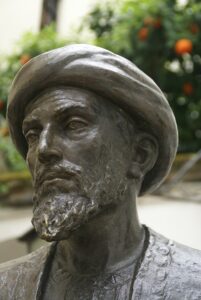
Author of Mishneh Torah, Maimonides’ book is considered to be a monumental Jewish work. He is responsible for formulating the 13 principals of Jewish faith.[1]

Born during the Medieval era in 1135 AD, Moses Ben Maimon came to be known by a single name: Maimonides. In Jewish circles, Maimonides is better known as Rambam, the Rabbi who brought clarity to Jewish Law with some calling him “the second Moses.” 

Two chapters of Mishneh Torah focused on the Messiah. Chapters 11 and 12 contains characteristics that would identify the Mashiach, Hebrew for Messiah, or would disqualify anyone purporting to be the Messiah.[2]

Considered controversial, his statements became a target of the Censor. As late as the 1990s, portions of Chapter 11 were relegated only to footnotes and even today requires deeper digging under the names Melachim uMilchamot or Mishneh Torah, Kings and Wars.

Explicitly in Chapter 11, Maimonides identified Balaam’s (Bilaam) prophecy as messianic. In a phrase-by-phrase interpretations, in agreement with Rabbi Rashi, he interpreted Balaam’s prophecy as referring to Mashiach:

“Reference to Mashiach is also made in the portion of Bilaam who prophesies about two anointed kings: the first anointed king, David, who saved Israel from her oppressors; and the final anointed king who will arise from his descendants and save Israel in the end of days. That passage Numbers 24:17-18 relates:

‘I see it, but not now’ – This refers to David;

‘I perceive it, but not in the near future;” – This refers to the Messianic king;

‘A star shall go forth from Jacob’ – This refers to David;

‘and a staff shall arise in Israel’ – This refers to the Messianic king…

Multiple prophecies establish a prophetic requirement the Messiah must be born in the royal lineage of David. Maimonides agreed:

“In the future, the Messianic king will arise and renew the Davidic dynasty, restoring it to its initial sovereignty.

Describing characteristics that would identify the Messiah when he arrived, the Rabbi expounded:

“If a king will arise from the House of David who diligently contemplates the Torah and observes its mitzvot as prescribed by the Written Law and the Oral Law as David, his ancestor, will compel all of Israel to walk in (the way of the Torah) and rectify the breaches in its observance, and fight the wars of God, we may, with assurance, consider him Mashiach.”

Anyone who denies the Messiah, Maimonides wrote, is denying the prophets, Moses, and the Scriptures. It is the same three prophetic aspects pointed out about himself to his followers and Cleopas by the resurrected Jesus: [3]

“Anyone who does not believe in him or does not await his coming, denies not only the statements of the other prophets, but those of the Torah and Moses…

Next, Maimonides described more pointedly the things that would disqualify anyone who might otherwise be viewed as the Messiah. Denouncing Jesus, the Rabbi pointedly called out Jesus of Nazareth by name saying he only “aspired” to be the Messiah, was executed, and that Christianity was a “stumbling block.”[4] 

“If he did not succeed to this degree or was killed, he surely is not the redeemer promised by the Torah. Rather, he should be considered as all the other proper and complete kings of the Davidic dynasty who died. God caused him to arise only to test the many, as Daniel 11:35 states: ‘And some of the wise men will stumble, to try them, to refine, and to clarify until the appointed time, because the set time is in the future.'”

“Jesus of Nazareth who aspired to be the Mashiach and was executed by the court was also alluded to in Daniel’s prophecies, as ibid. 11:14 states: ‘The vulgar among your people shall exalt themselves in an attempt to fulfill the vision, but they shall stumble.'”

“Can there be a greater stumbling block than Christianity?”

Mishneh Torah launched Maimonides into Jewish celebrity status prompting letters sent to him with questions. His response letters, known as Responsa (or Teshuvot), have become additional important texts of Maimonides’ Scriptural interpretations.[5]

One Responsa was to Yeminite Rabbi Jacob al-Fayumi, known as the “Epistle Concerning Yemen.” In the letter, Maimonides regarded Zachariah 6:12 and the parashah of Isaiah 52:13-53:12 as messianic prophecies. He quoted from Isaiah 52:15 and 53:2 foretelling the Messiah could be identified by his origins and his wonders:[6]

“…all the kings of the earth be thrown in terror at the fame of him – their kingdoms be in consternation, and they themselves will be devising whether to oppose him with arms, or to adopt some different course, confessing, in fact their inability to contend with him or ignore his presence and so confounded at the wonders which they will see him work, that they will lay their hands to their mouth; in the words of Isaiah, when describing the manner in which the kings will hearken to him, At him kings will shut their mouth; for that which had not been told them have they seen, and that which they had not heard they have perceived. [Is. 52:15]

“What is to be the manner of Messiah’s advent, and where will be the place of his first appearance?

…there shall rise up one of whom none have known before, and the signs and wonders which they shall see performed by him will be the proofs of his true origin; for the Almighty where he declares to us his mind upon this matter, says, ‘Behold a man whose name is the Branch, and he shall branch forth out of his place’ (Zech. Vi. I2). And Isaiah speaks similarly of the time when he will appear, without his father or mother or family being known, He came up before him, and as a root out of the dry earth [Is 53:2], etc.”

Supernatural powers of performing miracles, wonders, and resurrection of the dead were addressed by Maimonides in Chapter 11 without mentioning the Gospels nor Jesus of Nazareth by name. What the Rabbi did not say is often overlooked – such miracles could be performed by the Messiah although he did not say it is a requirement.

“One should not presume that the Messianic king must work miracles and wonders, bring about new phenomena in the world, resurrect the dead, or perform other similar deeds. This is definitely not true.”

Was Jesus of Nazareth a fulfillment of the Messiah prophecies or merely a stumbling block, a test sent by God?


Updated April 20, 2025.


Creative Commons License

This work is licensed under a Creative Commons Attribution-NonCommercial-NoDerivatives 4.0 International License.

REFERENCES:

[1] Maimonides. Mishneh Torah. Jewish year 4937 (1177 AD). “The Rambam’s Mishneh Torah.” <http://www.chabad.org/library/article_cdo/aid/682956/jewish/Mishneh-Torah.htm>   Rich, Tracey R. “Jewish Beliefs.” JewFAQ.org. n.d. <http://www.jewfaq.org/beliefs.htm>  “Moses Ben Maimon.” Jewish Encyclopedia. 2011. <http://www.jewishencyclopedia.com/articles/11124-moses-ben-maimon>  Furst, Rachel. “The Mishneh Torah.” MyJewishLearning.com. 2010. <http://mobile.myjewishlearning.com/texts/Rabbinics/Halakhah/Medieval/Mishneh_Torah.shtml>  Seeskin, Kenneth. “Maimonides.” Stanford Encyclopedia of Philosophy. 2006. revised 2017. <https://plato.stanford.edu/entries/maimonides>  Maimonides statue. Wikimedia Commons. image. n.d. <https://commons.wikimedia.org/wiki/File:Maimonides_statue_-_Cordoba.jpg
[2]] Maimonides, Moses. Mishneh Torah.  Ed. Yechezkal Shimon Gutfreund, Brooklyn, NY:  Sichos in English. “The Law Concerning Moshiach.” Kesser.org. n.d. <http://www.kesser.org/moshiach/rambam.html#SIE>  Maimonides. Mishneh Torah. “uMilchamot, the Laws of Kings and Their War.” 2015. <https://www.chabad.org/library/article_cdo/aid/1188343/jewish/Melachim-uMilchamot.htm>  Maimonides. Mishneh Torah. Sefaria.org. 2023. “Mishneh Torah, Kings and Wars.” <https://www.sefaria.org/Mishneh_Torah,_Kings_and_Wars?tab=contents
[3] Maimondies, Mishnah Torah. Melachim uMilchamot.  CR Josephus, Flavius. Against Apion. Book 1 #6-7. The Complete Works of Josephus. <http://books.google.com/books?id=e0dAAAAAMAAJ&printsec=frontcover&source=gbs_ge_summary_r&cad=0#v=onepage&q&f=false> Luke 24:24-27, 44.
[4] Mangel, Nissen. “Responsa.” Publisher:  Kehot Publication Society. 2008. Chabad.org. 2014.  <http://www.chabad.org/library/article_cdo/aid/107783/jewish/Responsa.htm>  “Jesus of Nazareth.”  Jewish Encyclopedia. 2011. <https://jewishencyclopedia.com/articles/8616-jesus-of-nazareth>
[5] Mangel.“Responsa.”
[6] Maimonides. “Letter to the South (Yemen)”. p374.  Neubauer and Driver.  The Fifty-third Chapter of Isaiah According to the Jewish Interpreters <https://books.google.com/books?id=YxdbAAAAQAAJ&pg=PP1&hl=en#v=onepage&q=advent&f=false> CR “Iggerot HaRambam, Iggeret Teiman.” Sefaria.org. responsa. n.d. <https://www.sefaria.org/Iggerot_HaRambam?tab=versions>  “Responsa.” Chabad.org. “The Epistle Concerning Yemen.”n.d.<https://www.chabad.org/library/article_cdo/aid/107783/jewish/Responsa.htm>