Magi – In a Jewish Nativity Story?
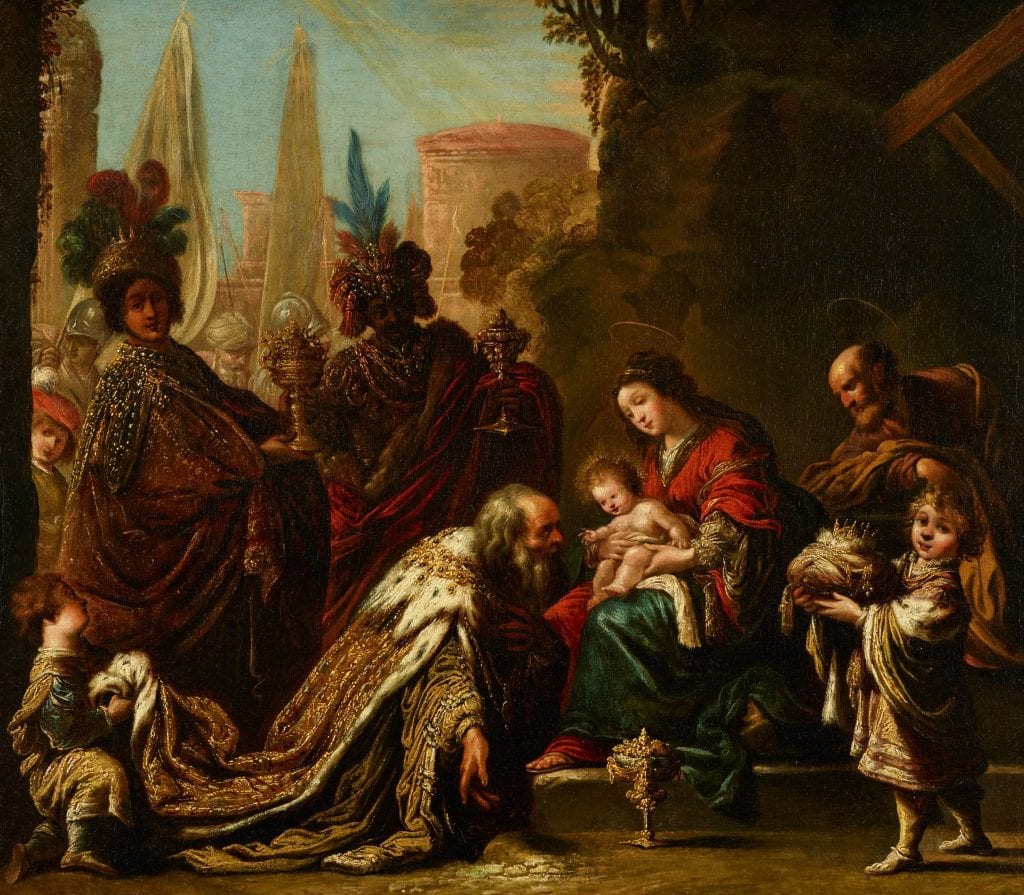
 

Adoration of the Magi by Claude Vignon, 1694.

Clearly not worried the inclusion of the Magi in his Jewish account would be questioned by his contemporaries, the author of Matthew was fully committed to it. He covered the magi story with 12 verses, at least 10 providing specific details.[1]

Magi were scorned by Judaism for their mystical reputation.[2] Not motivated by an ancient prophecy nor a prophet, an angelic appearance, or any type of divine revelation; rather, the Magi’s actions were compelled by an awe-inspiring scene they observed in the night sky.

Greek text of Matthew uses the word magos, the Latin word equivalent to magus, its plural form is magi.[2] The word is sometimes translated into English as “wise men” – both translations are correct.

Babylonians, Medes and Persians viewed magos as an eclectic group of priests, physicians, teachers, soothsayers, interpreters of dreams, astrologers, and sorcerers making it easy for magi to be referred to as “mystics.” Not surprisingly, magi is the root word of “magic.”

MT 2:1 “After Jesus was born in Bethlehem in Judea, during the time of King Herod, Magi from the east came to Jerusalem…” (NIV)

MT 2:1 “In the time of King Herod, after Jesus was born in Bethlehem of Judea, wise men from the East came to Jerusalem…” (NRSV)

Roman era Jewish society had a dual-perspective of magi. One perspective was that of the famed Hebrew, Daniel, a Israelite of royal descent captured by Nebuchadnezzar. Daniel was placed into the elite Babylonian school of the Chaldeans where he received an education in astronomy and astrology.[5]

God gave “Daniel understanding in all visions and dreams,” a gift that landed him in Nebuchadnezzar’s royal council of wise men, the chakkiym.[6] Later, Nebuchadnezzar made Daniel chief of all magi, a position known as Rab-mag.[7]

After the Medes and Persians overthrew the Babylonian Empire, Daniel’s “extraordinary spirit” again elevated him to a high level in the new government.[8] Under King Cyrus the main religion was Zoroastrianism where its founder, Zoroaster, was is often considered to be the original magi and priests of Zoroastrianism were called “magi.”.[9]

Setting the stage for the other Jewish perspective of magi began when Alexander the Great marched through Judea. Open-minded Hellenistic culture of the Greek Empire allowed the Jews religious freedom, but it also introduced Zoroastrianism that was intermingled with the influences of the Babylonian chakkiym. [10]

Over the coming decades, the effects of Hellenism on Jewish culture was unavoidable much to the frustration of the Jewish Rabbis. Liberal philosophies of Hellenism permeated Jewish culture meanwhile Greek became the common language.[11] Next came the Roman Empire which seemed content to leave the prevailing culture in Judea alone.[12]

As expert astronomers, magi used the legendary Babylonian astronomical science and charts to study of the motion of stars past, present and future. Ability to plot upcoming cosmic events by these wise men were scientifically predictive, not “mystical.”[13]

Toward the very end of the BC era a series of rare celestial conjunctions occurred, ones hard to ignore by astronomers then or today. Witnessing just one such rare conjunction can be an once-in-a-lifetime experience. Imagine the scenario where, in a space of just 5 years from 7-2 BC, there were 13 rare conjunctions including two triple conjunctions![14]

Zoroastrianism beliefs held that celestial events served as signs with earthly significance. Signs of a newborn king observed by the magi were so awe-inspiring, they set out on a month’s long quest to find and worship him.[15] Matthew does not say there were only three magi...the number of magi may or may not be accurate.

Not just anyone appearing on the door step of the King’s palace would expect to gain entry. Signifying King Herod‘s regard for magi, when they arrived unannounced the magi had no problem gaining direct access to the King who gave them his immediate and full attention.

Herod did not question the credibility of the magi when they gave him the alarming news about the birth of a King of the Jews. Neither did Herod’s Jewish religious experts who pointed the King to Micah’s prophecy saying a Jewish ruler was to be born in Bethlehem.

Believing the prophecy to be true, Herod invited the magi back for another meeting to investigate the timing of the star, directed them to Bethlehem, slyly asking for their help in finding the exact location of this newborn king. Angered when they didn’t return, Herod’s reaction by killing all the children 2 years old and under in the Bethlehem district demonstrates his belief in the truth of the magi’s message about a newborn King of the Jews.

King Herod and his royal Jewish religious council believed the credibility and message of the magi. How likely is it that the Jewish author of Matthew would unnecessarily introduce the magi…unless the author also believed it to be true?


Updated September 15, 2025.

Creative Commons License

This work is licensed under a Creative Commons Attribution-NonCommercial-NoDerivatives 4.0 International License.

REFERENCES:

[1] Matthew 2:1-12.
[2] Deuteronomy 4, 18.  Soncino Babylonian Talmud.  Sanhedrin 98a. <https://israelect.com/Come-and-Hear/sanhedrin/sanhedrin_98.html> “Zoroastrianism – Magi.” Geni. 2016. <https://www.geni.com/projects/Zoroastrianism-Magi/13185>
[3] “magus.” WordReference.com. <http://www.wordreference.com/es/translation.asp?tranword=magus> “magi.”  WordReference.com. <http://www.wordreference.com/es/translation.asp?tranword=magi> “magus.” Merriam-Webster <https://www.merriam-webster.com/dictionary/magus>
[4] Martin, Ernest L. The Star of Bethlehem – The Star That Astonished the World. 2017. Chapter 2. A.S.K. (Associates for Scriptural Knowledge. <http://web.archive.org/web/20170226050457/http://www.askelm.com/star/star002.htm>
[5] Daniel 1. Guisepi, Robert. “The Chaldeans, The Chaldeans (Neo-Babylonian) Empire.” International World History Project.  2007.  <http://history-world.org/chaldeans.htm>  “Chaldea.”  Encyclopædia Britannica. 2014.  <http://www.britannica.com>  “Chaldea.”  Jewish Encyclopedia.  2011. <http://www.jewishencyclopedia.com/articles/4213-chaldea>
[6] NKJV.  Daniel 1- 2.  “Magi.” New World Encyclopedia. 2014. <http://web.archive.org/web/20211122161026/http://www.newworldencyclopedia.org/entry/Magi>  Net.bible.org.  Daniel 2:12 Hebrew text “chakkiym” <02445>.  “Chaldea.” Jewish Encyclopedia.  Diodorus of Sicily. Mesopotamia: Ninus, Semiramis, the wonders of Babylon; Sardanapalus, Chaldaean astrology.  Vol. I.  Book II.  University of Chicago|Bill Thayer.  2017.  Page 431 # 24 ; p 447-457 #29-31. <http://penelope.uchicago.edu/Thayer/E/Roman/Texts/Diodorus_Siculus/home.html>
[7] Jeremiah 39:3, 13.
[8] NASB. Daniel 6, 10-12.  Deuteronomy 4:19.  Gascoigne, Bamber.  “History of Zoroastrianism.”  HistoryWorld.net. n.d.  <http://www.historyworld.net/wrldhis/PlainTextHistories.asp?historyid=ab71>  “Zoroastrianism – Magi.” Geni. “Daniel, the Magi and the Luni-solar Calendar of Israel.” TryGod.com. 2017. <http://try-god.com/daniel-the-magi-and-the-luni-solar-calendar-of-israel.php
[9] Zoroastrianism.” Jewish Encyclopedia. 2011. <http://www.jewishencyclopedia.com/articles/15283-zoroastrianism>  Eduljee, K. E. “Magi – Zoroastrian Priests.”  Zoroastrian Heritage. 2012. <http://zoroastrianheritage.blogspot.com/2012/09/magi.html>
[10] “Hellenism.” Jewish Encyclopedia. 2011. <http://www.jewishencyclopedia.com/articles/7535-hellenism>.  Hooker, Richard.  “Alexander the Great – Hellenistic Greece.” Washington State University. 1999. <http://web.archive.org/web/20110104072822/http://www.wsu.edu/~dee/GREECE/ALEX.HTM>  “Zoroastrianism – Magi.”  Geni. “Zoroastrianism.”  BBC|The British Broadcasting Corporation. 2009. <http://www.bbc.co.uk/religion/religions/zoroastrian>   Jafarey, Ali Akbar. “The Achaemenians, Zoroastrians in Transition.”  CAIS|The Circle of Ancient Iranian Studies. 2015. <http://www.cais-soas.com/CAIS/Religions/iranian/Zarathushtrian/achaemenian_zarathushtrian.htm>  Hooker, Richard.  “Mesopotamia:  The Persians.”  Washington State University. 1996. <http://web.archive.org/web/20110514001358/http://www.wsu.edu/~dee/MESO/PERSIANS.HTM>  Hooker, Richard.  “Hellenistic Greece:  Hellenism.” Washington State University. 1999. <http://web.archive.org/web/20110104072353/http://www.wsu.edu/~dee/GREECE/HELLGREE.HTM>   “Zoroastrianism.”  ReligionFacts.com. 2014.  <http://www.religionfacts.com/zoroastrianism/index.htm>  Reed, Vicky. “The Religion of the Persian Empire.” EsthersLegacy.com.  2011. <http://estherslegacy.com> “Zoroastrianism.”  PersianEmpire.info. 2007. <http://persianempire.info/zoro.htm>  Gascoigne. “History of Zoroastrianism.”  Gascoigne, Bamber. “Iran (Persia) timeline.” HistoryWorld.net. n.d.  <http://www.historyworld.net/timesearch/default.asp?conid=static_timeline&timelineid=759&page=1&keywords=Iran+%28Persia%29+timeline>  Eduljee. “Greek Perceptions of Zoroaster, Zoroastrianism & the Magi.”  Zoroastrian Heritage. 2011. <http://zoroastrianheritage.blogspot.com/2011/04/greek-perceptions-of-zoroaster.html>  Leverington, David A. Babylon to Voyager and Beyond – A History of Planetary Astronomy.  Chapter 1. 2003.  <http://assets.cambridge.org/97805218/08408/sample/9780521808408ws.pdf>  Diodorus.  Mesopotamia: Ninus, Semiramis, the wonders of Babylon; Sardanapalus, Chaldaean astrology.  Vol.I, Book II. Page 457; #31.
[11] Josephus.  Antiquities of the Jews. Book XII, Chapter II.
[12] Hooker. “Hellenistic Greece:  Hellenism.” Petrucci, Valerio. “Hellenization and Romanization – the Dialogue Between Greek and Roman Cultures in the 1st and 2nd Centuries.” 2017. Academia. <https://www.academia.edu>  “Judaea.” Livius.org. Ed. Jona Lendering. 2019. <https://www.livius.org/articles/place/judaea>
[13] Eduljee, K. E. “Greek Perceptions of Zoroaster, Zoroastrianism & the Magi.” Zoroastrian Heritage. 25 Apr. 2011. <http://zoroastrianheritage.blogspot.com/2011/04/greek-perceptions-of-zoroaster.html>  Leverington. Babylon to Voyager and Beyond – A History of Planetary Astronomy. Chapter 1.
[14] Carroll, Susan S. “The Star of Bethlehem:  An Astronomical and Historical Perspective.” Pulcherrima Productions.  1997.  Twin Cities Creation Science Association.  n.d. <http://www.tccsa.tc/articles/star_susan_carroll.pdf>  Phillips, Tony. “A Christmas Star for SOHO.”  NASA Science | Science New. 16 May 2000. <http://science.nasa.gov/science-news/science-at-nasa/2000/ast16may_1>  “Birth of Jesus.” Navsoft.com. 2012. <http://navsoft.com/html/birth_of_jesus.html>  Martin.  The Star of Bethlehem. Chapters 1, 4. <http://web.archive.org/web/20170111193244/http://www.askelm.com/star/star001.htm> <http://web.archive.org/web/20170821004027/http://www.askelm.com/star/star004.htm>  Cain, Fraser. “Venus and Jupiter’s Upcoming Conjunction.”   Universe Today.  29 Oct. 2004.  <http://www.universetoday.com/10006/venus-and-jupiters-upcoming-conjunction/#ixzz2B6cvKJEt>  Sielaff, David.  “An Important August 2 B.C.E. Conjunction.”  A.S.K. (Associates For Scriptural Knowledge), 2005. <http://www.askelm.com/news/n051211.htm>  Clevenger, John. “Astronomy, Astrology, and the Star of Bethlehem.”  Lake County (Illinois) Astronomical   Society.  n.d. <http://www.lcas-astronomy.org/articles/display.php?filename=the_christmas_star&category=miscellaneous>  Haley, A. S. “The Star of Bethlehem and the Nativity.”  Anglican Curmudgeon.  2009. <http://accurmudgeon.blogspot.com/2009/10/star-of-bethlehem-and-nativity.html>  Newman, Robert C. “The Star of Bethlehem: A Natural-Supernatural Hybrid?”  Interdisciplinary Bible Research Institute.  IBRI Paper (2001).  <http://www.newmanlib.ibri.org/Papers/StarofBethlehem/75starbethlehem.htm>  Beatty, Kelly. “Venus and Jupiter:  Together at Last.” Sky & Telescope. 25 June 2015. <http://www.skyandtelescope.com/astronomy-news/observing-news/venus-and-jupiter-a-dazzling-duo-062520154>  Ratnikas,  Algis. “Timeline 499BCE – 1BCE.”  Timeslines of History.  n.d. <http://timelines.ws/0D499_1BC.HTML>  Pratt, John P.  “The Star of Bethlehem’s Forerunner.” JohnPratt.com. <http://www.johnpratt.com/items/docs/lds/meridian/2000/xmas_star.html>  “Star of Bethlehem May Have Been Planets Jupiter, Venus.”  IU News Room. 16 Dec. 2003.  <http://newsinfo.iu.edu/news/page/normal/1203.html&t=Star%20of%20Bethlehem%20may%20have%20been%20planets%20Jupiter%20and%20Venus>  Mosley, John. “Common Errors in ‘Star of Bethlehem’ Planetarium Shows.” Third Quarter 1981, International Planetarium Society, Inc. n.d. <http://www.ips-planetarium.org/?page=a_mosley1981>  Flescher, Eric and Sessions, Larry. “Ten ‘Star’ of Bethlehem Myths: Part II.”  Space.com. 26 Dec. 2001. <http://web.archive.org/web/20041205014757/http://space.com:80/SpaceReportersNetworkAstronomyDiscoveries/flescher_Xmasstar2_122601.html>  Cain, Fraser. “Venus-Jupiter Conjunction, March 15th, 2012.”  Universe Today. 13 Mar. 2012. <http://www.universetoday.com/94113/venus-jupiter-conjunction-march-15th-2012 >  Fazekas, Andrew.  “Christmas Star Mystery Continues.”  National Geographic Daily News. 24 Dec. 2008.  <http://news.nationalgeographic.com/news/2008/12/081224-star-bethlehem.html>
[15] “Trade between the Romans and the Empire of Asia.” Heilbrunn Timeline of Art History. <http://www.metmuseum.org/toah/hd/silk/hd_silk.htm>  National Museum of American History, “Trade Routes” >  “Major Trade Routes of 2nd Century BCE – 1st Century CE.”  <http://web.archive.org/web/20160618154742/http://americanhistory.si.edu:80/numismatics/parthia/frames/pamaec.htm> “Iran Historical Maps Arsacid Parthian Empire, Armenian Kingdom.” Atlas of Iran Maps. n.d. Iran Politics Club. 2014. <http://iranpoliticsclub.net/maps/maps04/index.htm>
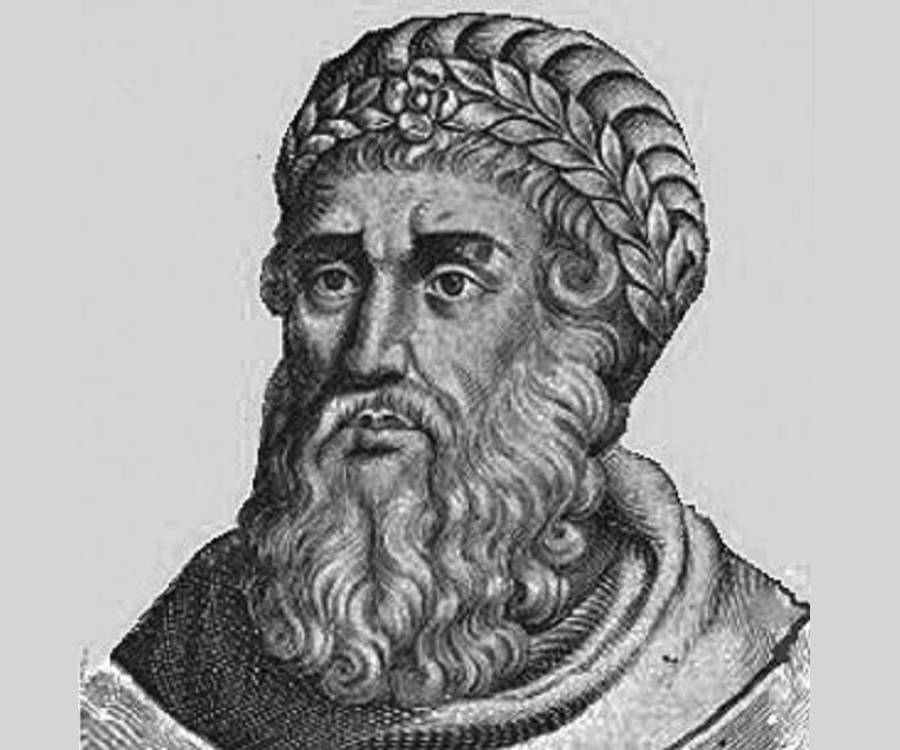
Herod – Profile of a Cruel & Cunning King


Infamous as King of Judea in Matthew’s Nativity story, he was a threat to the lives of the Magi, Mary, Joseph and baby Jesus. Herod’s profile is truly that of a villain for other reasons, too.

Jewish historian Josephus noted people quickly saw Herod’s harsh personality:

“…they saw that he was a violent and bold man, and very desirous of acting tyrannically.” – Flavius Josephus [1]

One clue for his cruel behavior might be that Herod was not himself a Jew. His father was Idumean and his mother Arabian.[2]

Aligning himself with Roman rulers, he was appointed as a military general “for he sold him that post for money.” Marc Antony named Herod as Tetrarch “by money” and such persuasions also helped avert a dangerous dalliance with Queen Cleopatra.[3]

Presenting Herod to the Roman Senate by Antony, the Senate voted to make him King of Judea in 40 BC. Authority in Judea had to be taken by force over the course of 3 years with assistance by Antony and Roman Legions.[4]

Later, Antony’s defeat by Octavius (aka Augustus) caused Herod to believe his days were numbered. With nothing to lose, he boldly presented himself to Caesar Augustus in Rome.

Herod positioned his loyalty to Antony as a quality that would likewise be valuable to Caesar if allowed to pledge his allegiance. The ploy worked establishing a lasting relationship with Augustus for the remainder of Herod’s life.[5]

Killings of many people, even though a king, was in violation of Jewish law compelling the Sanhedrin to put Herod on trial for murder. High Priest Hyrcanus tipped off the defiant Herod of the pending verdict allowing him to temporarily escape to Damascus.[6]

Revenue was acquired through heavy taxes, from booty of war and at least some illicitly. Josephus wrote that under cover of night, Herod robbed King David’s sepulcher of gold furniture and precious goods (the money had already been robbed).[7]

Enhancing the Jewish Temple, Herod is famed for building it back to the grandeur of Solomon.[8] Greek inscriptions and architectural features in the enhanced Temple were implemented by Herod. 

One such sacrilege was placing Rome’s golden eagle insignia over the Temple gate. It led to a future atrocity when Herod had 40 insurrectionists burned alive and marked his final days.[9]

Trusting no one, Herod was ruthless in quelling any possible threats.[10] A favored interrogation method was torture on “the rack.”

Some of those who met this fate were identified by Josephus. Victims included palace eunuchs, body guards, maids, friends of family members, soldiers, and anyone else possibly holding secrets with only family members being exempt..[11]

Family status; however, offered no safe harbor from execution. Murders by Herod were standard fare.

Members of the royal family consisted of 10 wives and children. Constantly in turmoil, they bore hatred for one another producing rivalries, slanders, lies, backstabbings, and murder conspiracies.[12]

Second wife of Herod was Mariamne whose 17 year-old son was drowned by order of  the King simply because he wanted someone else to be high priest. Former high priest, Hyrcanus, Mariamne’s father and old heir to the throne, was also killed by Herod.[13]

For rebuking Herod, his sister Salome and mother for complicity in the strangulation execution for her other 2 sons convicted for plotting to kill Herod, it led to Mariamne’s own execution.[14] Days before Herod died, he executed his son from his first wife, Antipater.[15]

According to Matthew, Herod believed he had been deceived by the Magi. They returned home by a different route while Joseph and Mary with baby Jesus escaped Judea to Egypt

MT 2:16 Then when Herod saw that he had been tricked by the magi, he became very enraged, and sent and slew all the male children who were in Bethlehem and all its vicinity, from two years old and under, according to the time which he had determined from the magi.” (NKJV)

Unusual for rulers of the era, Herod died a natural death, albeit a most miserable one. Disabled by a terrible groin condition, gangrenous bowels protruded out of his body compelling him to attempt a failed suicide.

Knowing death was imminent and feeling sorry for himself, according to Josephus, the King devised the most dastardly plan of his reign.[16] Surmising the principal men of Judea would all rejoice at his death rather than mourn, the King made a demented plan to murder them.

To deprive them of such mockery, under threat of death Herod summoned all the principal men throughout Judea to travel to his palace in Jericho. He then had them locked inside the hippodrome.[15] 

Before his death announcement was made public, the soldiers were to kill these principal men for the purpose of placing all of Judea in a state of mourning. Further, to ensure a deep national mourning, one member of each family in Judea was also to be killed.[17]

Salome, Herod’s reputed wicked sister, was to carry out his last wishes, but such depravity was even too much for her. Aborting the plan after the death of the king, she informed the soldiers the King had changed his mind at the last moment and they released the principal men.[18]

Does the historical profile of a cruel Herod strengthen or diminish the credibility of Matthew Nativity account of killing all male boys 2 years and younger in the Bethlehem area just to ensure he killed baby Jesus?


Updated October 5, 2025.

Creative Commons License
This work is licensed under a Creative Commons Attribution-NonCommercial-NoDerivatives 4.0 International License.

REFERENCES:

[1] Josephus, Flavius.  Antiquities of the Jews. Book XIV, Ch. IX.  William Whitson.  The Complete Works of Josephus. 1850. Google Books.  n.d <http://books.google.com/books?id=e0dAAAAAMAAJ&printsec=frontcover&source=gbs_ge_summary_r&cad=0#v=onepage&q&f=false> Josephus, Flavius.  Wars of the Jews.  Book I, Chapter X. William Whitson.  The Complete Works of Josephus. 1850.  Google Books. n.d. <http://books.google.com/books?id=e0dAAAAAMAAJ&printsec=frontcover&source=gbs_ge_summary_r&cad=0#v=onepage&q&f=false>  “Herod.”  Jewish Virtual Library. 2017. <http://www.jewishvirtuallibrary.org/herod>   “Herod the Great – Governor of Galilee (47-37 B.C.).” <https://encyclopedia2.thefreedictionary.com/Idumean> Bunson, Matthew. Encyclopedia of the Roman Empire. “Judaea.” 2002. <https://archive.org/details/isbn_9780816045624>
[2] Herod the Great.” Livius.org. Ed. Jona Lendering. 2017. <http://www.livius.org/articles/person/herod-the-great/?> “Edom (ē`dŏm), Idumaea, or Idumea.” The Free Dictionary. 2017. <http://www.bible-history.com/herod_the_great>  Bunson, Matthew. Encyclopedia of the Roman Empire. “Idumaea.” 2002. <https://archive.org/details/isbn_9780816045624> Herod the Great.” Livius.org. Ed. Jona Lendering. 2017. <http://www.livius.org/articles/person/herod-the-great/?> “Edom (ē`dŏm), Idumaea, or Idumea.” The Free Dictionary. 2017. <http://www.bible-history.com/herod_the_great>  Bunson, Matthew. Encyclopedia of the Roman Empire. “Idumaea.” 2002. <https://archive.org/details/isbn_9780816045624> “Herod the Great Biography.” TheFamousPeople. photo. n.d. <https://www.thefamouspeople.com/profiles/herod-the-great-37596.php
[3] Josephus. Antiquities. Book XIV, Chapters IV, V, IX, XI.  Josephus. Wars. Book I, Chapter X.
[4] Josephus. Antiquities. Book XIV, Chapter. XVI, XII-XIV.  Josephus. Wars. Book I, Chapters IV, XV – XVII.  “Herod I.” Jewish Encyclopedia.  2011. <http://www.jewishencyclopedia.com/articles/7598-herod-i>
[5] Josephus. Antiquities. Book XV, Chapters VI-VII.  Josephus. Wars. Book I, Chapter XIX-XX.  Bunson, Matthew. Encyclopedia of the Roman Empire. “Herod the Great.” 2002. <https://archive.org/details/isbn_9780816045624&gt > Bunson, Matthew.  Encyclopedia of the Roman Empire. “Jerusalem.” 2002. <https://archive.org/details/isbn_9780816045624>
[6] Josephus. Antiquities. Book XIV, Ch. IX; Book XV, Chapter II.  Josephus. Josephus. Wars. Book I, Chapter X. “Herod the Great.” Bible History Online. 2016.
[7] Josephus. Antiquities. Book XVI, Chapter VII.  Josephus. Wars. Book I, Chapters XXI, XXV, XXIV.  “Herod the Great.” Bible History Online. 2016. <http://www.bible-history.com/herod_the_great>  “Herod the Great.” Livius.org.
[8] Josephus. Antiquities. Book XV, Chapter XI.  Josephus. Wars. Book I, Chapter XXI.  “Herod the Great.” Bible History Online. 2016. <http://www.bible-history.com/herod_the_great>  Edersheim, Alfred. The Temple – Its Ministry and Services. 1826-1889. Chapter 1. <http://philologos.org/__eb-ttms/default.htm>  Hegg, Tim.  “Separating the Most Holy from the Holy:  The ‘Veil’ in the Tabernacle and First & Second Temples” Torah Resource. <http://www.torahresource.com/EnglishArticles/Veil%20ETS%20Paper.pdf>  “Temple of Jerusalem.”  New World Encyclopedia. 2015. <http://www.newworldencyclopedia.org/entry/Temple_of_Jerusalem>  “Herod’s Temple.”  Bible-history.com.  n.d.  <http://www.bible-history.com/herod_the_great/HERODHerods_Temple.htm>   “Herod.”  Jewish Virtual Library.
[9] Josephus. Antiquities. Book XV, Chapter VIII; Book XVI, Chapter V; Book XVII, Chapters VI; VIII. Josephus. Wars. Book I, Chapter XXI.  “Hellenism” Jewish Encyclopedia. 2011. <http://www.jewishencyclopedia.com/articles/7535-hellenism>  “Asia Minor.” Jewish Encyclopedia. 2011. <http://www.jewishencyclopedia.com/articles/2010-asia-minor>
[10] Josephus. Antiquities. Book V, Chapter 1; Book XVI, Ch. VII. Josephus. Wars. Book I, Chapter XXVI.
[11] Josephus. Antiquities. Book XVI, Chapters VIII, X; Book XVII, Chapter IV. Josephus. Wars. Book I, Chapter XXX.
[12] Josephus. Antiquities. Book XVII, Chapter I.  Josephus. Wars. Book I, Chapter XII. XXII.  “Herod the Great; Herodias.” Livius.org.
[13] Josephus. Antiquities. Book XV, Chapters III-VII, IX, XIII, XVI. Josephus. Wars. Book I, Chapter XXII.  Bunson. Encyclopedia of the Roman Empire. “Herod the Great.”
[14] Josephus. Antiquities. Book XV, Chapters III.
[15] Josephus. Antiquities. Book XVI, Chapter XI; Book XVII, Chapter IX.  Josephus. Wars. Book I, Chapter XXVII. XXXIII.  Bunson. Encyclopedia of the Roman Empire. “Herod the Great.”
[16] Josephus. Antiquities. Book XVII, Chapter VI.
[17] Josephus. Antiquities. Book XVII, Chapter VI. Josephus. Wars. Book I, Chapter XXXIII.
[18] Josephus. Antiquities. Book XVII, Chapter VII. Josephus. Wars. Book I, Chapter XXXIII.

Maimonides & Jesus of Nazareth – the Messiah?


Messiah or stumbling block? Rabbi Maimonides expressed his views on this question about Jesus of Nazareth as well as thoughts on Messiah prophecies, his lineage, and supernatural powers.

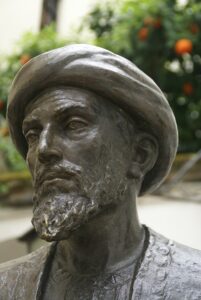
Author of Mishneh Torah, Maimonides’ book is considered to be a monumental Jewish work. He is responsible for formulating the 13 principals of Jewish faith.[1]

Born during the Medieval era in 1135 AD, Moses Ben Maimon came to be known by a single name: Maimonides. In Jewish circles, Maimonides is better known as Rambam, the Rabbi who brought clarity to Jewish Law with some calling him “the second Moses.” 

Two chapters of Mishneh Torah focused on the Messiah. Chapters 11 and 12 contains characteristics that would identify the Mashiach, Hebrew for Messiah, or would disqualify anyone purporting to be the Messiah.[2]

Considered controversial, his statements became a target of the Censor. As late as the 1990s, portions of Chapter 11 were relegated only to footnotes and even today requires deeper digging under the names Melachim uMilchamot or Mishneh Torah, Kings and Wars.

Explicitly in Chapter 11, Maimonides identified Balaam’s (Bilaam) prophecy as messianic. In a phrase-by-phrase interpretations, in agreement with Rabbi Rashi, he interpreted Balaam’s prophecy as referring to Mashiach:

“Reference to Mashiach is also made in the portion of Bilaam who prophesies about two anointed kings: the first anointed king, David, who saved Israel from her oppressors; and the final anointed king who will arise from his descendants and save Israel in the end of days. That passage Numbers 24:17-18 relates:

‘I see it, but not now’ – This refers to David;

‘I perceive it, but not in the near future;” – This refers to the Messianic king;

‘A star shall go forth from Jacob’ – This refers to David;

‘and a staff shall arise in Israel’ – This refers to the Messianic king…

Multiple prophecies establish a prophetic requirement the Messiah must be born in the royal lineage of David. Maimonides agreed:

“In the future, the Messianic king will arise and renew the Davidic dynasty, restoring it to its initial sovereignty.

Describing characteristics that would identify the Messiah when he arrived, the Rabbi expounded:

“If a king will arise from the House of David who diligently contemplates the Torah and observes its mitzvot as prescribed by the Written Law and the Oral Law as David, his ancestor, will compel all of Israel to walk in (the way of the Torah) and rectify the breaches in its observance, and fight the wars of God, we may, with assurance, consider him Mashiach.”

Anyone who denies the Messiah, Maimonides wrote, is denying the prophets, Moses, and the Scriptures. It is the same three prophetic aspects pointed out about himself to his followers and Cleopas by the resurrected Jesus: [3]

“Anyone who does not believe in him or does not await his coming, denies not only the statements of the other prophets, but those of the Torah and Moses…

Next, Maimonides described more pointedly the things that would disqualify anyone who might otherwise be viewed as the Messiah. Denouncing Jesus, the Rabbi pointedly called out Jesus of Nazareth by name saying he only “aspired” to be the Messiah, was executed, and that Christianity was a “stumbling block.”[4] 

“If he did not succeed to this degree or was killed, he surely is not the redeemer promised by the Torah. Rather, he should be considered as all the other proper and complete kings of the Davidic dynasty who died. God caused him to arise only to test the many, as Daniel 11:35 states: ‘And some of the wise men will stumble, to try them, to refine, and to clarify until the appointed time, because the set time is in the future.'”

“Jesus of Nazareth who aspired to be the Mashiach and was executed by the court was also alluded to in Daniel’s prophecies, as ibid. 11:14 states: ‘The vulgar among your people shall exalt themselves in an attempt to fulfill the vision, but they shall stumble.'”

“Can there be a greater stumbling block than Christianity?”

Mishneh Torah launched Maimonides into Jewish celebrity status prompting letters sent to him with questions. His response letters, known as Responsa (or Teshuvot), have become additional important texts of Maimonides’ Scriptural interpretations.[5]

One Responsa was to Yeminite Rabbi Jacob al-Fayumi, known as the “Epistle Concerning Yemen.” In the letter, Maimonides regarded Zachariah 6:12 and the parashah of Isaiah 52:13-53:12 as messianic prophecies. He quoted from Isaiah 52:15 and 53:2 foretelling the Messiah could be identified by his origins and his wonders:[6]

“…all the kings of the earth be thrown in terror at the fame of him – their kingdoms be in consternation, and they themselves will be devising whether to oppose him with arms, or to adopt some different course, confessing, in fact their inability to contend with him or ignore his presence and so confounded at the wonders which they will see him work, that they will lay their hands to their mouth; in the words of Isaiah, when describing the manner in which the kings will hearken to him, At him kings will shut their mouth; for that which had not been told them have they seen, and that which they had not heard they have perceived. [Is. 52:15]

“What is to be the manner of Messiah’s advent, and where will be the place of his first appearance?

…there shall rise up one of whom none have known before, and the signs and wonders which they shall see performed by him will be the proofs of his true origin; for the Almighty where he declares to us his mind upon this matter, says, ‘Behold a man whose name is the Branch, and he shall branch forth out of his place’ (Zech. Vi. I2). And Isaiah speaks similarly of the time when he will appear, without his father or mother or family being known, He came up before him, and as a root out of the dry earth [Is 53:2], etc.”

Supernatural powers of performing miracles, wonders, and resurrection of the dead were addressed by Maimonides in Chapter 11 without mentioning the Gospels nor Jesus of Nazareth by name. What the Rabbi did not say is often overlooked – such miracles could be performed by the Messiah although he did not say it is a requirement.

“One should not presume that the Messianic king must work miracles and wonders, bring about new phenomena in the world, resurrect the dead, or perform other similar deeds. This is definitely not true.”

Was Jesus of Nazareth a fulfillment of the Messiah prophecies or merely a stumbling block, a test sent by God?


Updated April 20, 2025.


Creative Commons License

This work is licensed under a Creative Commons Attribution-NonCommercial-NoDerivatives 4.0 International License.

REFERENCES:

[1] Maimonides. Mishneh Torah. Jewish year 4937 (1177 AD). “The Rambam’s Mishneh Torah.” <http://www.chabad.org/library/article_cdo/aid/682956/jewish/Mishneh-Torah.htm>   Rich, Tracey R. “Jewish Beliefs.” JewFAQ.org. n.d. <http://www.jewfaq.org/beliefs.htm>  “Moses Ben Maimon.” Jewish Encyclopedia. 2011. <http://www.jewishencyclopedia.com/articles/11124-moses-ben-maimon>  Furst, Rachel. “The Mishneh Torah.” MyJewishLearning.com. 2010. <http://mobile.myjewishlearning.com/texts/Rabbinics/Halakhah/Medieval/Mishneh_Torah.shtml>  Seeskin, Kenneth. “Maimonides.” Stanford Encyclopedia of Philosophy. 2006. revised 2017. <https://plato.stanford.edu/entries/maimonides>  Maimonides statue. Wikimedia Commons. image. n.d. <https://commons.wikimedia.org/wiki/File:Maimonides_statue_-_Cordoba.jpg
[2]] Maimonides, Moses. Mishneh Torah.  Ed. Yechezkal Shimon Gutfreund, Brooklyn, NY:  Sichos in English. “The Law Concerning Moshiach.” Kesser.org. n.d. <http://www.kesser.org/moshiach/rambam.html#SIE>  Maimonides. Mishneh Torah. “uMilchamot, the Laws of Kings and Their War.” 2015. <https://www.chabad.org/library/article_cdo/aid/1188343/jewish/Melachim-uMilchamot.htm>  Maimonides. Mishneh Torah. Sefaria.org. 2023. “Mishneh Torah, Kings and Wars.” <https://www.sefaria.org/Mishneh_Torah,_Kings_and_Wars?tab=contents
[3] Maimondies, Mishnah Torah. Melachim uMilchamot.  CR Josephus, Flavius. Against Apion. Book 1 #6-7. The Complete Works of Josephus. <http://books.google.com/books?id=e0dAAAAAMAAJ&printsec=frontcover&source=gbs_ge_summary_r&cad=0#v=onepage&q&f=false> Luke 24:24-27, 44.
[4] Mangel, Nissen. “Responsa.” Publisher:  Kehot Publication Society. 2008. Chabad.org. 2014.  <http://www.chabad.org/library/article_cdo/aid/107783/jewish/Responsa.htm>  “Jesus of Nazareth.”  Jewish Encyclopedia. 2011. <https://jewishencyclopedia.com/articles/8616-jesus-of-nazareth>
[5] Mangel.“Responsa.”
[6] Maimonides. “Letter to the South (Yemen)”. p374.  Neubauer and Driver.  The Fifty-third Chapter of Isaiah According to the Jewish Interpreters <https://books.google.com/books?id=YxdbAAAAQAAJ&pg=PP1&hl=en#v=onepage&q=advent&f=false> CR “Iggerot HaRambam, Iggeret Teiman.” Sefaria.org. responsa. n.d. <https://www.sefaria.org/Iggerot_HaRambam?tab=versions>  “Responsa.” Chabad.org. “The Epistle Concerning Yemen.”n.d.<https://www.chabad.org/library/article_cdo/aid/107783/jewish/Responsa.htm>