Conspiracy Theory – Christianity Is a Fiction


Adversaries of Christianity sometimes argue against the reality of Jesus of Nazareth as the Messiah, even that he is not a real historical figure, by claiming Christianity itself is a fictional story. One conspiracy theory claims Christianity and thus Jesus are the result of various groups colluding to invent a morphed deity image of a messiah:[1]

“…Christianity and the story of Jesus Christ were created by members of various secret societies, mystery schools and religions in order to unify the Roman Empire under one state religion.  …this multinational cabal drew upon a multitude of myths and rituals that existed long before the Christian era, and reworked them for centuries into the religion passed down to us today.” – Acharya S.

Challenges to create a fictional messiah figure would have been enormous at the beginning of the millennium. Especially true in an era without any means of electronic communication, media, even the printed word.

Just the opposite occurred. Christianity rose so rapidly, Jewish leaders tried to snuff it out quickly before it spread. Rome tried to quell Christianity by killing people who professed the belief.

During the four centuries before the Roman Empire, cabals from three Empires – Babylonians, Persians and Greeks – with authority over Judea had to be complicit in this conspiracy.[2] It has to be accepted by this theory there was a long-term strategy “to unify the Roman Empire under one state religion” even though just the concept of a Roman Empire was yet unknown.

Biblical history documents the Jews themselves were warring against each and taken captive in Babylon. After the Persian overthrow of Babylon, ancient enemies still wanted to subvert the Jew’s efforts.[3]

At least one conspiracy theory ironically maintains the created fictitious messiah image was himself a Jew. Probably the most scorned, if not hated, ethnic group in the Roman Empire were Jews.

Creating a Christian religion with a Jewish messiah upped the ante of the theory to the highest degree. Judaism then and now views Christianity as blasphemous for its belief that Jesus is the Messiah.

Pilate had Jesus crucified and to refute it means declaring renowned Roman historians Tacitus, Suetonius, and Josephus as well as others were wrong. The conspiracy theory proposes that Jewish leadership was supporting Rome when, in fact, Rome was crucifying Jews by the thousands and eventually destroyed Jerusalem and the Temple in 70 AD.[4]

For the invention of a fictional Jewish messiah, the image would call for a flawless ancestral background of pure Jewish lineage, not to mention an ancestral history free of unsavory or illegal activities. Alleged collaborators would then have to weave this complex lineage into a 2000 year timeline to create a messiah narrative.

A flawed genealogy would have been a huge obstacle for anyone who attempted to “rework them for centuries into the religion passed down to us today.” According to the Gospel accounts of Matthew and Luke, Jesus was born into this flawed Jewish royal lineage.

Genealogy of Jesus of Nazareth was anything but pure and flawless. A perfect lineage of a made-up messiah was simply not possible as demonstrated time and again by Scriptural history.

Disgraceful accounts pulled straight from the Old Testament, the Tenakh, include deceptions, lies, a prostitute, Gentile intermarriages, voyeurism, adultery, murder, greed, lascivious pleasures, etc. Background lineage of Jesus involved the most ignoble examples of disobedience to God yet by turning lemons into lemonade, each involved blessings from God.

Grandson of Abraham, Jacob swindled his older twin brother’s inheritance blessing from his father, Isaac. Jacob was still later renamed by God and became the father of the 12 tribes of Israel.[5]

Jacob’s own conniving sons sold their younger brother, Joseph, into slavery and lied to their father saying he had been killed by a wild animal. Joseph went on to become the second most powerful ruler in Egypt under Pharaoh and eventually saved his Hebrew family from a famine.[6]

Rahab, a Gentile prostitute spared from the destruction of Jericho, married a Hebrew named Salmon and their son was named Boaz who became a wealthy resident of Bethlehem.[7] Boaz married the Gentile Ruth, daughter-in-law of his Jewish relative Naomi, allowing Naomi to redeem her otherwise lost inheritance.[8]

Jewish sage Rabbi Rashi professed his distaste of having a Gentile in the prophetic lineage of the Messiah. His disgust appears in his commentary on the Bethlehem prophecy of Micah 5:2:[9]

“you should have been the lowest of the clans of Judah: [Rashi] You should have been the lowest of the clans of Judah because of the stigma of Ruth the Moabitess in you.” – The Complete Jewish Bible

Grandson of Boaz and Ruth was Jesse whose son, David, became the King of Israel.[10] David committed some dastardly deeds that would be scandalous in any century.

King David’s voyeurism led to an affair with his neighbor’s wife and when his plan to cover-up her illicit pregnancy failed, the King had her husband sent to the front lines of a war knowing he would be killed.[11] In spite of this, subsequent prophecies foretold the future Messiah would come from the lineage of David.

Solomon, King David’s son, indulged in the pleasures of 700 wives and 300 concubines, many of whom were Gentiles who brought with them forbidden idolatry influences. Still, Solomon built the Temple of God and was blessed with great wealth and wisdom.[12]

Arrival of Jesus of Nazareth happened during the era when Rome was experiencing it’s height of glory. One morning dawn everything changed, rather than the alleged “centuries” to rework “the religion passed down to us today.”

Unique to Christianity and the center of its core creed are the Resurrection accounts of Jesus.[13] No one, including the followers of Jesus, ever believed a resurrection could happen before Jesus was crucified.

Afterward he was crucified, he actually had to prove his own followers that he was back from the dead. Witness accounts about Jesus rang true with people, many believed labeled as “Christians.”

Adversaries of the Resurrection accounts refuted, ridiculed, imprisoned and killed witnesses who espoused the teaching of Christianity. They were still willing to die for what they believed.

Would anyone die to defend a false legend?

Updated February 16, 2025.

Creative Commons License

This work is licensed under a Creative Commons Attribution-NonCommercial-NoDerivatives 4.0 International License.

REFERENCES:

[1] Acharya S. (Murdock, D.M.)  The Christ Conspiracy. Google Books advertisement. n.d. https://books.google.com/books/about/The_Christ_Conspiracy.html?id=KnIYRi3upbEC> Stitcher. image. 2018. <https://megaphone-prod.s3.amazonaws.com/podcasts/4b9e4b82-9bf9-11e8-ad4e-23b6913e004d/image/aa316e8eb017eeb2d66bd3ab5ef8270c329c2cdb5347f0e589403a20369416bc4a7f9ac6d6f18a9a13fd4eb5c6d622a7e506238a1124dbd66019deba3532d1ee.jpeg
[2] Ezra 1:2-4, 6:7-12; 7:11-28. Spiro, Ken.  “History Crash Course #27: The Greek Empire.” Aish.com. 2001. <http://www.aish.com/jl/h/cc/48939587.html>  Hooker, Richard. “Hellenistic Greece: Alexander the Great.” Washington State University. 1999. <http://web.archive.org/web/20110104072822/http://www.wsu.edu/~dee/GREECE/ALEX.HTM>
[3] I Kings 11:26-12:24; Ezra 4;4, 5:6-17.
[4] Suetonius (C. Suetonius Tranquillus or C. Tranquillus Suetonius). The Lives of the Twelve Caesars. Ed. Maximilian Ihm, trans. J. C. Rolfe. University of Chicago|Bill Thayer. n.d. “The Life of Titus.” 109 AD. <https://penelope.uchicago.edu/Thayer/E/Roman/Texts/Suetonius/12Caesars/Titus*.html> “Siege of Jerusalem.” Encyclopædia Britannica. 2020. <https://www.britannica.com/event/Siege-of-Jerusalem-70> Josephus, Flavius. Wars of the Jews. Book II, Chapter XIV, Book V, Chapter XI.. <http://books.google.com/books?id=e0dAAAAAMAAJ&printsec=frontcover&source=gbs_ge_summary_r&cad=0#v=onepage&q&f=false>
[5] Genesis 25; 27-28.
[6] Genesis 37; 41-46.
[7] Joshua 2, 6, Ruth 4; I Chronicles 2:1-17.
[8] Ruth 2-4.
[9] The Complete Jewish Bible with Rashi’s Commentary. Micah 5:2 Rashi commentary.
[10] Ruth 4; I Chronicles 2:10.
[11] 2 Samuel 11-12.
[12] 2 Chronicles 7, 9; I Kings 7-8, 10.
[13] I Corinthians 15:3-4.
Isaiah Messiah Prophecies – Any Exceptions?


Isaiah is the greatest of all the prophets, according to the Jewish Encyclopedia, and regarded by many Rabbi sages as second in importance only to Moses.[1] Prophecies of Isaiah foretell of the Messiah throughout his writing 300 years after the reign of King David, about 700 years before Jesus of Nazareth appeared on the scene.

Many of Isaiah’s prophecies are referenced in the Babylonian Talmud reinforcing their significance.[2] In tractate Sanhedrin 98 alone, six Rabbis make 11 references to Isaiah’s Messiah prophecies.[3]

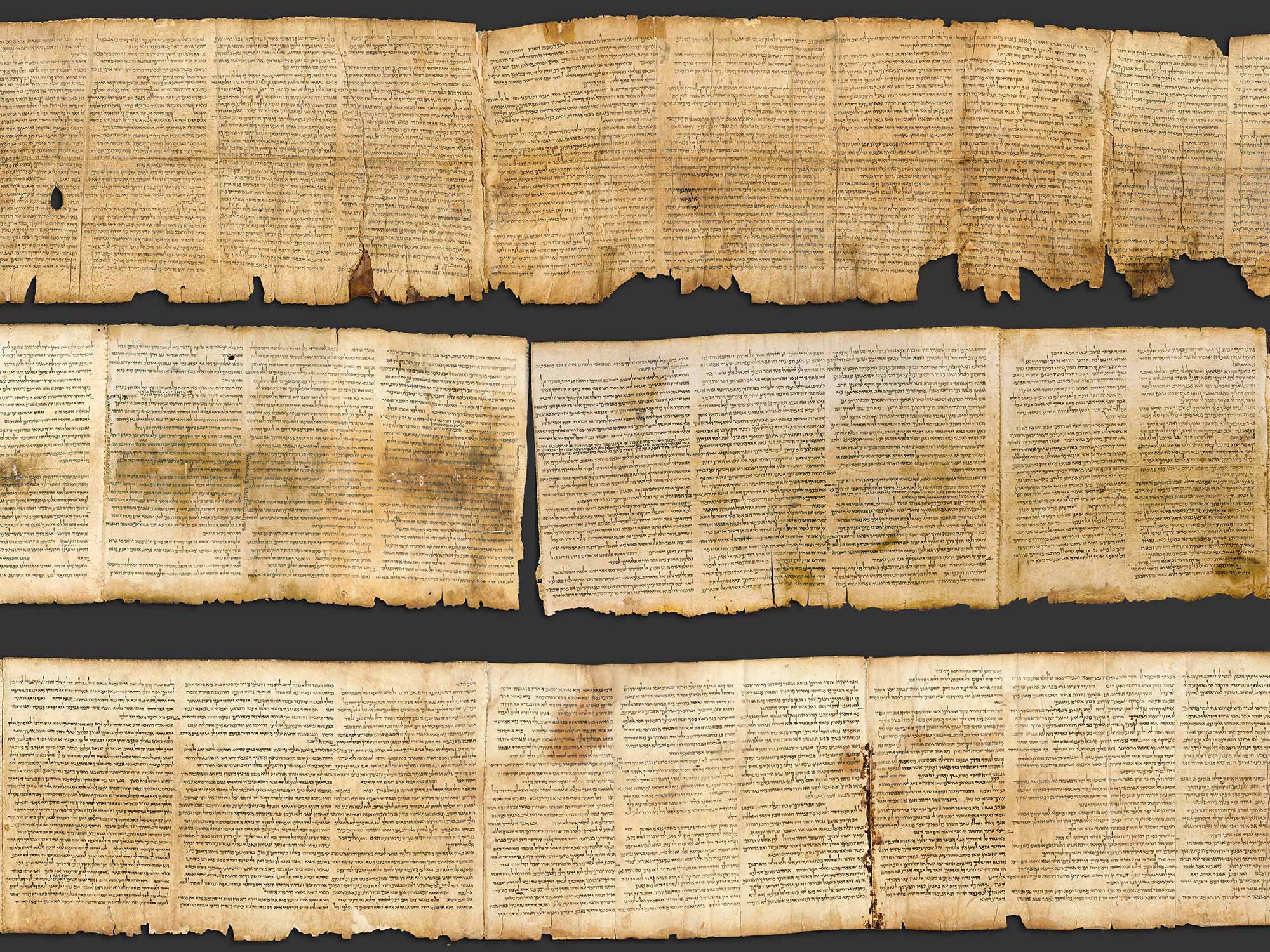
Dead Sea scrolls

Dead Sea Scrolls discoveries in 1947 yielded one of the most treasured finds, the Great Isaiah Scroll. Dated to about 125 BC, it is the oldest known, nearly complete Hebrew text of the Book of Isaiah.[4]

In Jerusalem, the scroll is secured in the Israel Museum. It is 1000 years older than the Masoretic texts which primarily serve as the source for today’s Jewish Bible, the Tenakh.[5]

Translating ancient Hebrew text has its challenges. Consisting of an alphabet with only 22 letters, all consonants, are used to form a root word which often times can either be a noun or a verb.

Translators must then rely on the broader context to fill in the vowels, tenses and other words to form a complete sentence in English.[6] Subjective translations obviously opens the door to variation.

In turn, variations in translations can impact interpretations of a prophecy’s meanings.[7] No surprise, Judaism interpretations are not always in agreement with Christianity, some differences are less clear than others.[8]

Jonathan Targum (targum means “translation”) is known as the “Official Targum to the Prophets” an Aramaic translation of the Tenakh with roots going back to about 200 BC.[9] According to the Jewish Encyclopedia, it was written “more freely, in harmony with the text of the prophetic books.”[10]

Scrolls were not broken down into chapter and verse when they were written. A section of verses on a specific topic are known as a parashah or pericope, such as Isaiah 52:13 – 53:12 about “My Servant.”

Opening the Isaiah 52-53 parashah, Jonathan Targum reads, “Behold my servant Messiah shall prosper…”  Towards the end of the parashah it reads, “…so as to cleanse their souls from sin:  these shall look on the kingdom of their Messiah…”[11]

Most Christians believe Isaiah’s 52-53 parashah depicting of the life, torment, death and satisfaction in life-after-death of My Servant is a prophecy about the Messiah fulfilled by the trial, crucifixion, burial and Resurrection of Jesus of Nazareth. Judaism generally regards the parashah as a metaphor of a man, the nation of Israel and the house of Jacob ; however, not all Jewish authorities agree – Rabbi Rashi commented it refers to the biblical strongman, Sampson.[12]

Hours before his arrest, during his final Passover meal with his Disciples, Jesus pointed out a prophecy written about himself that was soon to be fulfilled. Quoting from the parashah, Isaiah 53:12, he said:

LK 22:37 “It is written: ‘And he was numbered with the transgressors’; and I tell you that this must be fulfilled in me. Yes, what is written about me is reaching its fulfillment.””(NIV)

Preeminent Jewish Scriptures authority Rabbi Maimonides once asked a0 question, “What is to be the manner of Messiah’s advent, and where will be the place of his first appearance?” Answering his own question, the Rabbi quoted two prophecies from the parashah; Isaiah 53:2, regarding the Messiah’s unheralded arrival, and Isaiah 52:15, explaining how kings would be “confounded at the wonders” the Messiah would perform.[13]

Most controversial is the prophecy Isaiah 7:14 viewed by Christianity as being fulfilled by the birth of Jesus of Nazareth. Masoretic text translates`almah as meaning “young woman” while nearly all Christian Bibles translate `almah as “virgin.”[14] Making the controversy more provocative are some Christian Bible versions inconsistently translating Isaiah 7:14 as “young woman,” then translating it differently in Matthew as “virgin.”[15]

Jesus of Nazareth caused a stir, according to Luke, when he read from Isaiah to begin his ministry. Jesus read from Isaiah 61:1-2:[16]

IS 61:1-2 “The Spirit of the Lord GOD is upon Me, Because the LORD has anointed Me To preach good tidings to the poor; He has sent Me to heal the brokenhearted, To proclaim liberty to the captives, And the opening of the prison to those who are bound; To proclaim the acceptable year of the LORD, And the day of vengeance of our God; To comfort all who mourn…” (NKJV)

Jesus had identified Isaiah’s prophecies as the basis for people to see that he is the fulfillment of those prophecies. Later, Jesus said the prophesies written by the prophets about the himself had to be fulfilled.[17]

Can some of the prophesies found in the Book of Isaiah be discarded or are they all to be regarded as pr0phecies about the Messiah?


Updated November 23, 2025

Creative Commons License

This work is licensed under a Creative Commons Attribution-NonCommercial-NoDerivatives 4.0 International License.

REFERENCES:
[1] “Isaiah.”  Jewish Encyclopedia.  2011. <http://www.jewishencyclopedia.com/articles/8235-isaiah>
[2] Jones, Dennis A.  “Jewish Messianic Texts.”  The Emmanuel Church of the Web. n.d.  <http://fecotw.tripod.com/id88.htmlThe Babylonian Talmud. Trans. Michael L. Rodkinson. 1918. http://www.sacred-texts.com/jud/talmud.htm#t08>  Soncino Babylonian Talmud. Ed. Rabbi Isidore Epstein. 1935 – 1948. <https://israelect.com/Come-and-Hear/tcontents.html>
[3] Soncino Babylonian Talmud.  Sanhedrin 98a & b footnotes: Isaiah XLIX:7, XXIX:21  I:25, LIX:19, LIX:20, LX:21, LIX:16, XLVIII:11, LX:22; LIII.4.  Also 38a, footnote #9 to Isaiah 8:14. <https://israelect.com/Come-and-Hear/sanhedrin/sanhedrin_98.html>
[4] “The Great Isaiah Scroll.” 2018. The Israel Museum, Jerusalem. <http://dss.collections.imj.org.il/isaiah>  Miller. Library of Congress (United States). n.d. “Scrolls From the Dead Sea.” <https://www.loc.gov/exhibits/scrolls/late.html> Israel Antiquities Authority. 2012. “The Leon Levy Dead Sea Scrolls Digital Library.”  <https://www.deadseascrolls.org.il/explore-the-archive/search#q=’Isaiah‘> Fred P. The Great Isaiah Scroll. 1998. “Qumran Great Isaiah Scroll.” <http://www.moellerhaus.com/qumdir.htm> Abegg, Jr., Martin G., Flint, Peter W. and Ulrich Eugene Charles.  The Dead Sea Scrolls Bible: the oldest known Bible translated for the first time into English. 2002. p 281. <http://books.google.com/books?id=c4R9c7wAurQC&lpg=PP1&ots=fQpCpzCdb5&dq=Abegg%2C%20Flint%20and%20Ulrich%2C%20The%20Dead%20Dead%20Sea%20Scrolls%20Bible%2C&pg=PP1#v=onepage&q=Isaiah&f=false>  “Dead Sea Scrolls.” Archaeology. 2018. <http://www.allaboutarchaeology.org/dead-sea-scrolls.htm>  “The Dead Sea Scrolls.” National Endowment For The Humanities. image. 2015. <https://essentials.neh.gov/sites/default/files/DeadSeaScroll_v1.jpg>
[5] Benner, Jeff A. “The Great Isaiah Scroll and the Masoretic Text.” Ancient Hebrew Research Center. 2017. <http://www.ancient-hebrew.org/bible_isaiahscroll.html> “Masoretic Text.” Encyclopædia Britannica. n.d. <https://www.britannica.com/topic/Masoretic-text>  “Jewish Concepts: Masoretic Text.” Jewish Virtual Library. 2018. <https://www.jewishvirtuallibrary.org/jsource/Judaism/Masoretic.html>  “Masoretic Text.” Textus-Receptus.Com. 2016. <http://textus-receptus.com/wiki/Masoretic_Text>  “Masoretic Text.” New World Encyclopedia. 2014. <http://www.newworldencyclopedia.org/entry/Masoretic_Text> Zew, Moshe. “The Numeric System of the Bible.” 27 Dec. 2013.  WorldWide Witness by Moshe Zew.  <http://www.kolumbus.fi/gematria/numeric.htm>
[6] “The Hebrew Language.”  MyJewishLearning.com. n.d.  <http://www.myjewishlearning.com/culture/2/Languages/Hebrew.shtml>
“History of the Hebrew Language.”   B’NAI ZAQEN. 2005. <http://www.zaqen.info/hislangu.htm> Benner, Jeff A. “Introduction to the Ancient Hebrew Vocabulary.” Ancient Hebrew Research Center. 2013. <https://www.ancient-hebrew.org/introduction.htm>  Benner, Jeff A.  “Introduction to the Hebrew Bible.” Ancient Hebrew Research Center. 2017. <https://www.ancient-hebrew.org/introduction.htm>
[7] Benner. “Introduction to the Hebrew Bible.”
[8] Neubauer and Driver. The Fifty-third Chapter of Isaiah According to the Jewish Interpreters. “Introduction.” pp. xxix- lxv. <https://books.google.com/books?id=YxdbAAAAQAAJ&pg=PP1&hl=en#v=onepage&q=introduction&f=false>  Sullivan, Charles A. “A History of Chapters and Verses in the Hebrew Bible.” 2012. <http://charlesasullivan.com/2693/a-history-of-chapters-and-verses-in-the-hebrew-bible>
[9] Neubauer, Adolf. And Driver, Samuel Rolles. The Fifty-third Chapter of Isaiah According to the Jewish Interpreters. 1877. “Thargum of Yonathan (Jonathan Targum)” pp. 5-7. <https://books.google.com/books?id=YxdbAA
[10] “Targum.” Jewish Encyclopedia. 2011. AAQAAJ&pg=PP1&hl=en#v=onepage&q=Thargum&f=false>
[11] Neubauer. The Fifty-third Chapter of Isaiah According to the Jewish Interpreters.  “Thargum of Yonathan.” pp. 5-7.
[12] The Complete Jewish Bible with Rashi Commentary. Isaiah 53:3. Rashi commentary. Soncino Babylonian Talmud. n.d. Sotah 14a. <https://israelect.com/Come-and-Hear/sotah/sotah_14.html#14a_1> Crispin, Moshe Kohen ibn.  “Sefer ha-Musar.”  Neubauer, Driver & Rolles. The Fifty-third Chapter of Isaiah According to the Jewish Interpreters.  pp. 99-101.   <http://books.google.com/books?id=YxdbAAAAQAAJ&pg=PP1#v=onepage&q=advent&f=false> The Compete Jewish Bible- with Rashi Commentary.  Isaiah 7:14. CR Judges Chapter 13.
[13] Mangel, Nissen. “Responsa.” Chabad.org. 2018. <http://www.chabad.org/library/article_cdo/aid/107783/jewish/Responsa.htm> Maimonides, “Letter to the South (Yemen)”. p 374. Neubauer and Driver.  The Fifty-third Chapter of Isaiah According to the Jewish Interpreters.
[14] Isaiah 7:14. The Complete Jewish Bible with Rashi Commentary.  Isaiah 7:14. Jewish Publication Society Bible. <http://www.breslov.com/bible/Isaiah7.htm#14> “Mishneh Torah, Virgin Maiden 1. “Sefaria.org. n.d. <https://www.sefaria.org/Mishneh_Torah%2C_Virgin_Maiden.1.5?lang=bi&gt;>  Mishneh Torah, Forbidden Intercourse 17.” Sefaria.org. Footnotes #48 & 49. n.d. <https://www.sefaria.org/Mishneh_Torah%2C_Forbidden_Intercourse.17.13?lang=bi&with=Navigation&lang2=en>
[15] Good News Translation; Net Bible Translation.
[16] Luke 4:16-21; Isaiah 61:1-2a.
[17] Luke 24:44-48.

Luke – the Investigative Reporter


Gospel of Luke’s account about the life of Jesus of Nazareth for centuries has been disputed where scholars have endeavored to prove or disprove its veracity. Some have focused on the integrity of the content, others on the identity of the unnamed author; however, there are also other substantial factors to consider.

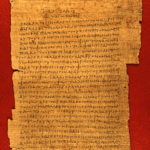
P75, circa 175-225 AD.

Among the first to document the identity of the author of the Gospel was Irenaeus, a student of Polycarp who was in turn a pupil of John, an actual Disciple of Jesus.[1] He identified the author as a Gentile doctor, a Physician named Luke, the inseparable traveling companion of the Apostle Paul whom he mentioned several times in New Testament books.[2]

Not himself an eyewitness; instead, Luke identifies the sources of his investigation, noted as “many” being original eyewitnesses where he personally investigated their validity. Nearly half of Luke’s content is unique in which 6 miracles are reported including the resurrection of a dead boy and 15-17 parables (was it an illustration or a parable?).[3]

Evidence can be seen in the quotes and parallels passages found in the older Gospels of Matthew and Mark. John‘s Gospel account corroborates information in Luke.

Unique to Luke are accounts of the birth circumstances of John the Baptist; the identity of his father, Zachariah, and mother, Elizabeth, and her role with Mary during their pregnancies.  Also is angel Gabriel’s messages from God delivered separately to Zachariah and Mary, and Mary’s hymn of praise are also exclusive.

Two specific crucifixion scenarios are found only in the Luke’s Gospel. Quoted is the conversation between the criminals being crucified with Jesus. Upon his death, distraught witnesses reacted by “beating their breasts” in severe mourning.

Credibility of a statement can be determined regardless of the identity of the author. A point of credibility is the investigative letter being addressed to a specific person, “most excellent Theophilus”:

LK 1:1-4 “Many have undertaken to draw up an account of the things that have been fulfilled among us, just as they were handed down to us by those who from the first were eye-witnesses and servants of the word. Therefore, since I myself have carefully investigated everything from the beginning, it seemed good also to me to write an orderly account for you, most excellent Theophilus, so that you may know the certainty of the things you have been taught.” (NIV)

Theophilus is the same name to whom the Book of Acts  was also written establishing both accountability and consistency of the two accounts. Josephus identified Theophilus as the next High Priest after Jonathan circa 37-40 AD.[4]

Found only in Luke and Acts are the two Greek words, apographo and apographe – a verb and a noun – cited as the motivation for Joseph to take his nearly 9-month pregnant wife, Mary, to Bethlehem 90 miles away. Neither Greek word translates to the equivalent English word of “census,” often imprecisely used in Matthew’s Christmas Nativity story.[5]

Seven government rulers are identified in Luke, all corroborated in secular history including Caesar Augustus, Tiberius Caesar, Judean King Herod, and Tetrarchs Herod and Philip.[6] Two “governors,” Quirinius and Pilate, were both identified using the exclusive Greek hegemoneuo meaning to act with authority as governors, though not necessarily official “governors.”[7]

Distinctively identified and quoted are Resurrection witnesses. Most notable is Cleopas with his traveling partner heading home to Emmaus after being with some of the Disciples that weekend.[8]

Unrecognized, Jesus joined Cleopas and his partner walking down the road and asked what they were discussing so intently. Cleopas is quoted explaining the sequence of events involving the enc9ounter by the women of Galilee with angels at the empty tomb who proclaimed Jesus was alive and how the empty tomb was confirmed by other unnamed witnesses.[9]

Corroborating John’s eyewitness Gospel account of the gathering of Disciples and followers in the locked room that Sunday evening, Luke adds a distinguishing depiction of events. Cleopas and his partner had rejoined the gathering telling of their encounter with the resurrected Jesus and, in turn, they were told Jesus had also appeared to Simon (Peter).

Terrified is how the author described the  group’s encounter when Jesus suddenly appeared in a locked room. Thinking they were seeing a ghost, Jesus calmed their fears saying “Do you have anything here to eat?” and ate some fish to prove he was not a ghost.[10]

From a different perspective, the author’s omissions of certain witness accounts and miracles mentioned in the other Gospels, do not appear in Luke.[11] Omitted is key information which could otherwise enhance the Resurrection account if the author had chosen to do so.

Missing is Mary Magdalene’s encounter with the resurrected Jesus and John running with Peter to see the empty tomb. Omissions are a big clue that the Gospel is a collection of witness accounts.

One possible reason for Mary’s omission is revealed in Cleopas’ witness statement because when he departed for home before anyone had reported seeing the resurrected Jesus. Luke had to be aware of Mary Magdalene’s encounter with the resurrected Jesus through his investigation by knowing Paul, contacts with Disciples and interviews of other witnesses.[12]

Only twice in the entire Gospel of Luke is Mary Magdalene mentioned and no statements are specifically attributed to Mary Magdalene. Therein lies the potential reason for the omission – Mary Magdalene was not a witness whom Luke interviewed.[13]

Forthright acknowledgements, exclusive specific details, omissions of information seen in other Gospels; corroboration by secular history; named witnesses; quotes; lack of personal opinions or injections; and ignored opportunities to embellish. All are hallmarks of a straightforward, true investigative report.

Is Luke’s Gospel authorship and investigative account true?


Updated August 29, 2025.

Creative Commons License

This work is licensed under a Creative Commons Attribution-NonCommercial-NoDerivatives 4.0 International License.

REFERENCES:

[1] Schaff, Philip. “Introductory Note to Irenæus Against Heresies.” Ante-Nicene Fathers. Volume I. n.d. Christian Classics Ethereal Library. 2005. <http://m.ccel.org/ccel/schaff/anf01.ix.i.html Schaff, Philip. “Introduction Note to the Epistle of Polycarp to the Philippians.” Ante-Nicene Fathers. Volume I. n.d. Christian Classics Ethereal Library. 2005. <http://m.ccel.org/ccel/schaff/anf01.iv.i.html Irenaeus of Lyons. Against Heresies. Book III, Chapters I.1, X.1, XIII.3, XIV.1, XIV.1, XIV.2 quoting Luke 1:2, XIV.3, XV.1, 3, XXIII.1. Philip Schaf, ed. Ante-Nicene Fathers. Volume I. Christian Classics Ethereal Library. 2005. <http://www.ccel.org/search/fulltext/Heresies
[2] Colossians 4; Philemon 1; 2 Titus 4. Irenaeus, Heresies. Book III, Chapter XIV.1.  Aherne Cornelius. “Gospel of Saint Luke.” The Catholic Encyclopedia. Volume 9. 1910. <http://www.newadvent.org/cathen/09420a.htm>
[3] Gloag, Introduction to the Synoptic Gospels. pp 38-42. 1895. <http://catalog.hathitrust.org/Record/008728595> Smith, Barry D. “The Gospel of John.”  F. 5.3.3.  Crandall University. 2015. <http://www.mycrandall.ca/courses/NTIntro/John.htm Sween, Don and Nancy. “Parable.” BibleReferenceGuide.com. n.d. <http://www.biblereferenceguide.com/keywords/parable.html Sween. “Parable.”  Swete. The Gospel According to St. Mark, pp. LXXIV, 83. 1902. <https://books.google.com/books?id=WcYUAAAAQAAJ&lpg=PA127&ots=f_TER300kY&dq=Seneca%20centurio%20supplicio%20pr%C3%A6positus&pg=PP1#v=onepage&q&f=false>  “Luke.” Easton’s 1897 Bible Dictionary. 3rd Edition.  Christian Classics Ethereal Library. n.d. <http://www.ccel.org/e/easton/ebd/ebd/T0002300.html#T0002331>  “Parable.” International Standard Bible Encyclopedia.  2018. <http://www.internationalstandardbible.com/P/parable.html> “The Parables of Jesus.” Ryrie Study Bible. “The Miracles of Jesus.” Ryrie Study Bible. Fairchild, Mary. “Miracles of Jesus: From Healing the Sick to Turning Water Into Wine.” ThoughtCo. n.d. <&lt;https://www.learnreligions.com/miracles-of-jesus-700158>
[4] Josephus, Flavius. Antiquities of the Jews. Book XVIII, Chapter V.3, Book XX, Chapter VIII.5 & 7; Book XVII, Chapter IV.2; Book XVIII, Chapter V.3; Book XIX, Chapter VI.2; Book XX, Chapter IX.7. The Complete Works of Josephus. Trans. William Whitson. <http://books.google.com/books?id=e0dAAAAAMAAJ&printsec=frontcover&source=gbs_ge_summary_r&cad=0#v=onepage&q&f=false>  CR Josephus. Antiquities. Book XVII, Chapter IV.2.  “Theophilus.” Jewish Encyclopedia. 2011. <https://jewishencyclopedia.com/articles/14364-theophilus>
[5] Net.bible.org. Greek text. “aprographe <582>.” Lexicon-Concordance Online Bible. n.d.  <http://lexiconcordance.com/greek/0582.html>  “apographo <583>.” Lexicon-Concordance Online Bible. n.d. <http://lexiconcordance.com/greek/0583.html>  The Complete Works of Josephus. Trans. and commentary. William Whitson. 1850. <https://books.google.com/books?id=e0dAAAAAMAAJ&printsec=frontcover&source=gbs_ge_summary_r&cad=0#v=onepage&q=census&f=false>  Smith, William; Wayte, William; Marindin, G.E., Ed. A Dictionary  of Greek and Roman Antiquities. 1890. “apographe.” <https://books.google.com/books?id=Cu89AAAAYAAJ&pg=PA403&lpg=PA403&dq=greek+word+for+census&source=bl&ots=LM1MjmCiJt&sig=1_yjJgyNxcCcSWZvf0QK69IJuMw&hl=en&sa=X&ved=0ahUKEwjx0oPA04DYAhXo6YMKHebvAEwQ6AEIejAK#v=onepage&q=register&f=false>
[6] Luke 2, 3. Net.bible.org. Luke 2:1 footnote #5 and Greek text. “hegemoneuo <2230>” Lexicon-Concordance Online Bible. Josephus. Antiquities. Book VIII, Chapter XV; Book X, Chapter IV; Book XIV, Chapter IX, & XII; Book XVIII, Chapter VI.  Josephus, Flavius. The Life of Flavius Josephus. #9, 17. The Complete Works of Josephus. Trans. William Whitson. <http://books.google.com/books?id=e0dAAAAAMAAJ&printsec=frontcover&source=gbs_ge_summary_r&cad=0#v=onepage&q&f=false Josephus, Flavius. Wars of the Jews. Book I, Chapter XXVII. The Complete Works of Josephus. Trans. William Whitson. <http://books.google.com/books?id=e0dAAAAAMAAJ&printsec=frontcover&source=gbs_ge_summary_r&cad=0#v=onepage&q&f=false>  Josephus, Flavius.  Against Apion. Book II, #22. The Complete Works of Josephus.  Trans. William Whitson. <http://books.google.com/books?id=e0dAAAAAMAAJ&printsec=frontcover&source=gbs_ge_summary_r&cad=0#v=onepage&q&f=false> “Pontius Pilate.” Livius.org. Ed. Jona Lendering. 2014. <http://www.livius.org/pi-pm/pilate/pilate01.htm> “legate.”  Encyclopædia Britannica. 2018. <https://www.britannica.com/topic/legate-Roman-official>
[7] Net.bible.org. Luke 2:1 footnote #5 and Greek text. “hegemon <2232>.” Lexicon-Concordance Online Bible.  n.d. <http://lexiconcordance.com/greek/2230.html>  Josephus. Antiquities. Book VIII, Chapter XV, Book X, Chapter IV; Book XIV, Chapter IX, X, XII; Book XVIII, Chapter VI; Book XX, Chapter XVIII.  Josephus. The Life of Flavius Josephus. #9, 17.  Josephus. Wars. Book I, Chapter XXVII.  Josephus. Against Apion. Book II, #22.
[8] John 19. Luke 24:18 footnote Ryrie Study Bible.  “Cleopas.” Bible-history.com. n.d. <http://www.bible-history.com/links.php?cat=43&sub=1173&cat_name=Bible+Names+A-G&subcat_name=Cleopas>
[9] Sapir, Avinoam. LSI Laboratory for Scientific Interrogation, Inc. n.d. <http://www.lsiscan.com/index.htm>  “SCAN – Scientific Content Analysis (Statement Analysis).” Advanced Polygraph. 2011. <http://www.advancedpolygraph.com.au/scan.htm>
[10] NET, NIV, NLT. Luke 24. CR Mark 16.
[11] Swete, Henry Barclay. The Gospel According to St. Mark,  pp. xxxvix – xl, LXX, LXXII, LXXIV-LXXV. 1902. <https://books.google.com/books?id=WcYUAAAAQAAJ&lpg=PA127&ots=f_TER300kY&dq=Seneca%20centurio%20supplicio%20pr%C3%A6positus&pg=PP1#v=onepage&q&f=false Smith, Barry D. “The Gospel of Mark.”  Crandall University. n.d. <http://www.mycrandall.ca/courses/NTIntro/Mark.htm> “Introductions to Matthew.” Ryrie Study Bible. Ed. Ryrie Charles C.  Trans. New American Standard. 1978. “Introductions to Matthew.” Ryrie Study Bible. “Introduction to the Book of Mark.” Ryrie Study Bible. “Introduction to the Book of Luke.”&Ryrie Study Bible.  “New Testament.” Jewish Encyclopedia. 2011. <http://www.jewishencyclopedia.com/articles/11498-new-testament>  “gospel.” ReligionFacts.com. 2016. <http://www.religionfacts.com/christianity/texts/gospels.htm>  Gloag, Paton J.  Introduction to the Synoptic Gospels. pp 45, 204.. 1895. <http://catalog.hathitrust.org/Record/008728595>
[12] 2 Timothy 4; Philemon 1; Colossians 4
[13] Luke 8; 20; and 24.. Smith, Barry D. “The Gospel of John.”  Fonck, Leopold.  “Gospel of St. John.”  The Catholic Encyclopedia.  Volume 8. New York:  Robert Appleton Company.  1910. New Advent. 2014. <http://www.newadvent.org/cathen/08438a.htm>  Kirby, Peter. “Gospel of John.” EarlyChristianWritings.com. 2014. <http://www.earlychristianwritings.com/john.html> “The Book of John.”  Quartz Hill School of Theology. 2017. <http://www.theology.edu/biblesurvey/john.htm>  “Gospel of John.”  Theopedia.com. Encyclopedia of biblical Christianity. n.d. <http://www.theopedia.com/Gospel_of_John>