Abraham – Patriarch of Jews, Muslims and Christians


Jews, Muslims and Christians have a common religious patriarch – Abraham. It is one of the biggest, if not the biggest, irony of these major world religions.

Muslims trace their lineage back to Ishmael, son of Abraham.[1] Jews trace their ancestry from Abraham through Jacob, and Isaac to King David and likewise, Christianity traces the lineage of Jesus through the line of David to Abraham.[2]

As a Chaldean born in Ur of the Chaldees, a future region of Babylon, Abram moved with his father, Terah, and their entire family to Haran in the land of Canaan.[3] Decades later as a 75-year old man, God told Abram to move his own family to an unnamed destination promising “…and in you all the families of the earth shall be blessed.”[4]

Faithfully, Abram eventually resettled not far from the mounts of Moriah near a city named Salem. Abram eventually questioned God … how would His blessing be honored since he and his wife, Sarai, were childless and very old?

“The Wanderings And Life of Abraham The Patriarch.” Ortelius – 1592

Second guessing God’s promise, the couple agreed that Abram would produce a child through Sarai’s maid servant, Hagar. Their baby was a boy named Ishmael.

Great consternation developed between the Sarai and Hagar. At age 13, Ishmael and his mother parted company with Abram and Ishmael went on to become father of the Arab nation.

When Abram was 99 years old, God promised Sarai would miraculously have a son at her old age of 90, the newborn was to be named Isaac.[5] God also changed Abram’s name to Abraham and Sarai to Sarah.

God’s blessing also included a promise that Abraham’s descendants would produce nations and kings, a seemingly difficult concept for a man who had no nation to call his own:

Gen. 17:5-6 “And your name shall no longer be called Abram, but your name shall be Abraham, for I have made you the father of a multitude of nations. And I will make you exceedingly fruitful, and I will make you into nations, and kings will emerge from you.” (Complete Jewish Bible)

After Isaac was older, God tested Abraham’s faith once again. He instructed Abraham to sacrifice his only son without whom the promise of a royal legacy would also die.[6]

Human sacrifices were not uncommon in that era such as to the pagan gods Baal and Moloch. On the sacrificial alter, Isaac was spared at the last moment by the Angel of the Lord providing a substitute sacrificial of a ram entangled in a nearby thicket.[7]

Isaac went on to marry Rebekah, a story in its own right. To them was born a set of paternal twin boys, Esau and Jacob, with completely opposite personalities.

Eventually Jacob, the second born, would deceive his blind father and steal Esau’s firstborn blessing.[8] Isaac unwittingly passed along to Jacob his inheritance blessing received from his own father, Abraham.

Enraged by the stolen blessing, Esau planned to kill his twin brother, but Rebekah tipped off Jacob who fled the country. Over the next 20 years in exile, Jacob fathered 10 sons through his first wife, Leah, and one to his second wife, Rachel. 

Jacob decided to risk returning to his homeland with all his family and possessions still believing Esau might want to kill him.[9] Ratcheting up the fear factor, the night before entering his homeland Jacob received word that Esau was coming to meet him with a band of 400 men – certainly not the appearance of a friendly welcome home party. 

In a dream that night, God changed Jacob’s name to Israel.[10] Israel entered the land of Abraham the next day and much to his relief, Esau welcomed him with open arms.[11]

Rachel died during the childbirth of Israel’s last and 12th son, Benjamin. She was buried near Ephrath, in the district of Bethlehem, a very short distance from Salem, the city one day to be called Jerusalem.[12] Israel’s sons would live to become known as the fathers of the 12 tribes of the Children of Israel.[13]

Years later, Israel still often called Jacob, and his sons were forced to flee their enemies. Returning with his clan to the site of Bethel, he offered a sacrifice at the place where God had changed his name to Israel. God reappeared to Jacob saying:

Gen 35:11 …”I am the Almighty God; be fruitful and multiply; a nation and a multitude of nations shall come into existence from you, and kings shall come forth from your loins. (CJB)[14]

A severe famine in the land of Canaan compelled Israel to send his sons to Egypt in search of food as his grandfather Abraham had once done. The second most powerful man in Egypt turned out to be their long lost son, Joseph, whom his jealous brothers had sold into slavery years earlier and lied to their father saying he had been killed by a wild animal.[15]

Returning home to get their father and families, Isaac and his sons all would be eventually reunited in Egypt. Joseph initially provided protection to his father’s family, but  over the course of 400 years, the Israelites became slaves of Egypt,

Before Israel died, he gave a blessing to each of his sons. For only one son, Judah, did he provide a blessing of power and royalty describing him as a lion:

Gen 49:8-10 “Judah, [as for] you, your brothers will acknowledge you. Your hand will be at the nape of your enemies, [and] your father’s sons will prostrate themselves to you.  A cub [and] a grown lion is Judah.  From the prey, my son, you withdrew. He crouched, rested like a lion, and like a lion, who will rouse him?  The scepter shall not depart from Judah, nor the student of the law from between his feet, until Shiloh comes, and to him will be a gathering of peoples.” (CJB)

Rabbi Rashi, one of Judaism’s most revered scriptural interpreters, identified Shiloh as the “King Messiah, to whom the kingdom belongs” and the scepter refers to the royal lineage of David and thereafter.”[16] According to Rashi, the prophetic blessing of Judah was a pretext to the establishment of the kingdom of David.

Jesus of Nazareth is a direct descendant of Abraham, Isaac and Jacob, all of whom were blessed by God to produce a kingdom – was it merely by chance that Jesus was born in this lineage, one prophesied for the Messiah?


Updated April 20, 2025.

Creative Commons License

This work is licensed under a Creative Commons Attribution-NonCommercial-NoDerivatives 4.0 International License.

REFERENCES:

[1] Qur’an Surah 2:127-128, 133; 3:68, 84.  CR Surah 3:65; 4:163; 6:84; 19:47-52; 29:27; 33:7; 38:45-47.
[2] I Chronicles chapter 1. Matthew 1. Luke 3. Qur’an Surah 3:33; 19:58. 
[3] Genesis 11- 12.
[4] Genesis 12:3; 15:4.  NASB, NKJV, NRSV.
[5] Genesis 15, 17, 21.  Qur’an Surah 11:69-73; 14:39; 21:72; 37:109-112. Ortelius, Abraham. Kestenbaum & Company. “Abraham Ortelius.” map. 1592. <https://www.kestenbaum.net/auction/lot/Auction-77/077-107> <https://i.pinimg.com/originals/61/17/5e/61175ea5254a4cb8979365ada64d42ea.jpg>
[6] “Human Sacrifices.” Bible-history.com. n.d. <http://www.bible-history.com/backd2/human_sacrifice.html>  Hefner, Alan G. “Baal.” Encyclopedia Mythica. 2004. <http://www.pantheon.org/articles/b/baal.html>  “Sacrifice.” Jewish Encyclopedia.  2011.
[7] Genesis 22.
[8] Genesis 25, 27, 29.
[9] Genesis 29-30.
[10] Genesis 32, 35.
[11] Genesis 33.
[12] Genesis 35.
[13] Genesis 35; I Chronicles 2.  Qur’an cites the “Children of Israel” 41 times – Trans. Abdullah Yusuf Ali.
[14] Cross reference Qur’an Surah 19:6; 21:71
[15] Genesis chapters 37; 39-47.  Qur’an 12:4-102, 111.
[16] Rashi. The Compete Jewish Bible – with Rashi Commentary.  Commentary on Gensis 49:10.  “Rashi (Rabbi Shlomo Yitzchaki).” Jewish Virtual Library. 2017.  Mindel, Nissan. “Rabbi Shlomo Yitzchaki – Rashi.” Chabad.org. 2017. <http://www.chabad.org/library/article_cdo/aid/111831/jewish/Rabbi-Shlomo-Yitzchaki-Rashi.htm>

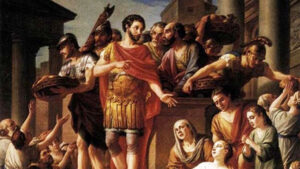
Jews, Muslims & Atheists Have One Thing In Common


One fact is common to Christianity, Judaism, Islam and at least some atheists – the historical existence of Jesus of Nazareth. If any credible adversary could prove that Jesus never existed, rest assured they would certainly do it and many have tried although Judaism or Islam can’t be to blame.

Agreement by avowed antagonists towards Christianity provides a completely different validation perspective. When opposing forces agree, it becomes a virtually indisputable fact.  


Writing of the Quran was completed in 632 AD and became the scriptural foundation for Muslims over the 1500 years since. It may come as a surprise to many that the Quran recognizes Jesus as a historical figure making reference to Jesus in 28 separate verses including 22 that reference “Jesus, Son of Mary,” such as this verse: [1]

“Behold! the angels said: “O Mary! Allah giveth thee glad tidings of a Word from Him: his name will be Christ Jesus, the son of Mary, held in honour in this world and the Hereafter and of (the company of) those nearest to Allah.”[2]

To be clear, the Quran does not say that Jesus is the Son of God, only that he is the “son of Mary,” however, the Quran does teach that Jesus was a prophet mentioned in the same company with Noah, Abraham, Ismael, Isaac, Jacob and Moses.[3] Born of Mary and to be named as one of the greatest prophets, Jesus had to have lived just as these other great religious figures.

Connections between Judaism and Jesus or Yeshua are like a U-shaped magnet – inseparable yet with polar opposites that repel each other. The existence of Jesus of Nazareth, who was himself a Jew, cannot be denied by Judaism where he is treated as a very real person in its Scriptures, oppositions and historical reference materials.

The Jewish Encyclopedia published in 1912, republished online as JewishisEncyclopedia.com, makes many references to the life and teachings of Jesus of Nazareth. Its article, “Jesus of Nazareth,” not only does it acknowledge the existence of Jesus, The Jewish Encyclopedia goes further – it sets the date of his birth at “around 2 BC” and his death in the year “3789 (March or April, 29 AD).”[4] Specifically commenting about the accuracy of the Gospel of Luke about Jesus’ existence:

“The whole picture of John the Baptist and of Jesus as bearers of good tidings to the poor has the stamp of greater truthfulness.”[5]

In its biography of “Jesus of Nazareth,”The Jewish Virtual Library estimates the date for the death of Jesus by crucifixion between 27 and 36 AD.[6] Encyclopedia Judaica states matter-of-factly that the four New Testament Gospels themselves are reliable, historical records of an actual historical Jesus:[7]

“The Gospels are records about the life of Jesus. John’s Gospel is more a treatise reflecting the theology of its author than a biography of Jesus, but Matthew, Mark, and Luke present a reasonably faithful picture of Jesus as a Jew of his time… The Jesus portrayed in these three Gospels is, therefore, the historical Jesus.” – Encyclopedia Judaica 

Throw into the mix another group that is antagonistic towards all religions – atheists. Self-described atheist blogger, Tim O’Neill, specializes in historical reviews and atheism. With a Master of Arts degree in Medieval Literature from the University of Tasmania, he is a member of both the Australian Atheist Foundation and the Australian Skeptics.

In his 2-part webpage article “An Atheist Examines the Evidence for Jesus,” O’Neill decimates the theories of a mythic origin of Jesus. For example, O’Neill says that a false idea of a mythical crucified Messiah creates so many problems needed to support the myth, the idea becomes so unrealistic that it could only mean the Bible account is true:[8]

“It’s hard to see why anyone would invent the idea of a crucified Messiah and create these problems. And given that there was no precedent for a crucified Messiah, it’s almost impossible to see this idea evolving out of earlier Jewish traditions. The most logical explanation is that it’s in the story, despite its vast awkwardness, because it happened.”

Affirming Jesus of Nazareth was a true historical figure; instead, the center of the debate percolates on the purpose of the life of Jesus of Nazareth…was he just a trouble-making Jewish preacher; or a prophet of God; or actually the Messiah, the Son of God? The starting point is accepting that Jesus did, in fact, walk this Earth – did he?


Updated June 4, 2025.

Creative Commons License

This work is licensed under a Creative Commons Attribution-NonCommercial-NoDerivatives 4.0 International License.

REFERENCES:

[1] Quran. Trans. Abdullah Yusuf Ali. n.d. <http://search-the-quran.com>  “The Descriptive Titles of Jesus in the Quran (part 1 of 2): “The Messiah” and “a Miracle.”’ IslamReligion.com. 2014.  <http://www.islamreligion.com/articles/230>  Basic Facts. Best of Amsterdam. image. 2015. <https://www.bestofamsterdam.com/wp-content/uploads/2015/02/Basic-Facts.jpg
[2] Quran. Ale-‘Imran 3:45-51. Trans. Abdullah Yusuf Ali.
[3] Al-Ahzab: 33:7. Al-Baqara 2:136. An-Nisa 4:163, 171. Aal-e-Imran 3:84. Al-Maeda 5:75.
[4] “The New Testament.”  Jewish Encyclopedia. 2011. <http://www.jewishencyclopedia.com>  
[5] “Jesus of Nazareth.”  Jewish Encyclopedia. 2011. “Flavius Josephus.” Encyclopædia Britannica. 2014.
[6] “Crucifixion.” Jewish Virtual Library. 2014. American-Israel Cooperative Enterprise. <https://www.jewishvirtuallibrary.org>
[7] “Jesus.” Encyclopaedia Judaica. p 246.
[8] O’Neill, Tim. “An Atheist Historian Examines the Evidence for Jesus (Part 2 of 2). StrangeNotions.com. <http://www.strangenotions.com/an-atheist-historian-examines-the-evidence-for-jesus-part-2-of-2>

Roman Elites Who Acknowledged Reality of Christ


Three Roman society elites – a Roman Senator and Consul; an imperial archive custodian turned Roman historian; a famous comedian – all have one thing in common. Each ridiculed the crucified Jewish Christ and in doing so confirmed his historical existence.

A prominent Roman political figure, Gaius Cornelius Tacitus (56-120 AD), served as a Roman Senator, a Consul, and a provincial governor.[1] Highly esteemed in Roman society was his position as a Senator; moreover, he was voted as a Consul, a dual leader of the Roman Senate.[2]

As a Consul, he was believed to have served as a provincial governor though he gained more fame for his historical work, Annales. In it, he inadvertently made a defense of Christians.

Tacitus called out Nero for falsely blaming the Christians for burning Rome as a means to cover up his own duplicity. Though far from a sympathetic manner, Tacitus was obligated to explain the identity of the Christians:

“Nero fastened the guilt and inflicted the most exquisite tortures on a class hated for their abominations, called Christians by the populace.  Christus, from whom the name had its origin, suffered the extreme penalty during the reign of Tiberius at the hands of one of our procurators, Pontius Pilatus, and a most mischievous superstition, thus checked for the moment, again broke out not only in Judaea, the first source of the evil, but even in Rome, where all things hideous and shameful from every part of the world find their centre and become popular.”[3]

Christus is Latin for Christ as well as the Greek word Christos, both meaning “Messiah.”[4] Some skeptics suggest that since the name of Jesus was not actually mentioned, there is no proof Christus refers to Jesus.[5]

Suetonius (circa 71-135 AD), another Roman historian, was a close friend with Roman Consul Pliny the Younger, who was also a lawyer and author. Pliny considered Suetonius as a scholar of the highest integrity.

Friendship with Pliny the Younger opened the door to Suetonius for extraordinary opportunities. Suetonius had full access to all of Rome’s libraries; was custodian of the archives of imperial letters written by previous Emperors; and had the responsibility for all imperial correspondence for Emperor Hadrian.[6]

Known for his historical work, The Lives of the Twelve Caesars, written less than 100 years after the crucifixion, covered reigns of the first twelve Roman Emperors from Julius Caesar to Domitian. Suetonius wrote Claudius Caesar placed blame on “Chrestus” as the source of the Jews causing trouble in Rome:

“Since the Jews constantly made disturbances at the instigation of Chrestus, he expelled them from Rome.”[7]

New Testament Book of Acts 18:2 corroborates the statement in The Life of Claudius. The reference says, “… Claudius had commanded all the Jews to leave Rome.”[8]

Critics do not dispute the slightly different spelling of “Christus.” Instead, the same argument used against Tacitus is used for Suetonius’ reference saying since “Jesus” is not mentioned specifically by name, there is no proof that Chrestus is a historical reference to Jesus of Nazareth.

Suetonius made a similar reference as Tacitus in The Life of Nero defining Christians as a class of men motivated by their new Christian teachings. The same words are used by Suetonius to describe Christian beliefs as a “mischievous superstition.”

“Punishment was inflicted on the Christians, a class of men given to a new and mischievous superstition.”[9]

New Christian beliefs were indeed causing problems for Roman rulers. Among them, the Sanhedrin had filed formal charges with Roman Procurator Festus against the Apostle Paul whereupon Paul was discovered to be a Roman citizen who appealed to Caesar and was then imprisonment in Rome.

Another incident dragged in Rome when an illegal execution was reported to Roman Procurator Albinus. According to Josephus, the provocative stoning deaths of Jesus’ brother, James, and his companions were ordered to be stoned by the Sanhedrin Chief Priest.

On a much lighter note, newsworthy personalities of today – gladly or not – know they are in the national discourse when they become the subject of a Saturday Night Live satirical skit. The humor of SNL is based on satire of real high-profile current events with the assumption that their public TV audience is aware of the subject matter.

Lucian, a Greek satirist (circa 115-200 AD), who authored more than 70 works, is considered to be among the greatest of Roman era satirists. As a celebrity, he toured and presented his shows throughout the regions of Greece, Italy and Gaul (France and surrounding areas).[10]

Among Lucian’s works is The Death of Peregrine, a satire about the factual events of a man, Peregrinus Proteus, who cremated himself at the Greek Olympics in 165 AD. Peregrine, at one point in the satire, encountered some Christians of Palestine:

“It was now that he came across the priests and scribes of the 11 Christians, in Palestine, and picked up their queer creed…. The Christians, you know, worship a man to this day, — the distinguished personage who introduced their novel rites, and was crucified on that account.”

“You see, these misguided creatures start with the general conviction that they are immortal for all time, which explains the contempt of death and voluntary self-devotion which are so common among them; and then it was impressed on them by their original lawgiver that they are all brothers, from the moment that they are converted, and deny the gods of Greece, and worship the crucified sage, and live after his laws.”[11]

Lucian’s satire literally played off the actual Gospel’s message little more than a century later. At the risk of his reputation, Lucian assumed his audiences in the late 100s were aware of the fact that Jesus lived; was a Jewish lawgiver who taught the gift of eternal life; and was crucified for his new teachings.

Strength of the evidence from these three sources of antiquity that Jesus is a real historical figure comes in part from their close proximity in history to Procurator Pilate. None had favorable views of the teachings of the founder of Christianity – Tacitus and Suetonius viewed it as a “mischievous superstition” and Lucian made fun of its “queer creed.”

Are the historical references by Tacitus, Suetonius and Lucian to the historic existence of Jesus of Nazareth fact or baseless?


Updated April 14, 2025.

Creative Commons License

This work is licensed under a Creative Commons Attribution-NonCommercial-NoDerivatives 4.0 International License.

REFERENCES:

[1] “Tacitus.” Encyclopædia Britannica. 2014. “Gaius Cornelius Tacitus.” UNRV History |The Roman Empire. <http://www.unrv.com/bio/tacitus.php>  “Tacitus.” Livius.org. Ed. Jona Lendering. 2019. <https://www.livius.org/sources/content/tacitus>  “Tacitus.” Encyclopædia Britannica. 2023.<https://www.britannica.com/biography/Tacitus-Roman-historian>
[2] Livius.org. Ed. Jona Lendering. 2019. <http://www.livius.org/cn-cs/consul/consul.html>  Roman Consuls.”  UNRV History |The Roman Empire.  <http://www.unrv.com/government/consuls.php>
[3] Tacitus, Gaius Cornelius. The Annals. 109 AD. Trans. Alfred John Church and William Jackson Brodribb.  Internet Classic Archive. 2009.  Book XV.  <http://classics.mit.edu/Tacitus/annals.html>
[4] “Christus.” Latin Dictionary.  2008.  Latin-Dictionary.org. <http://www.latin-dictionary.net>   Strong, James, LL.D., S.T.D.  “christos <5547>” (Greek).   Lexicon-Concordance Online Bible. <http://lexiconcordance.com>
[5] Murdock, D.M. aka S., Acharya.  “Pliny, Tacitus and Suetonius:  No Proof of Jesus.” Truth Be Known. 2017.  <http://www.truthbeknown.com/suetoniuschresto.htmlrel=”nofollow”>
[6] “Suetonius.” Livius.org. Ed. Jona Lendering. 2019. <http://www.livius.org/su-sz/suetonius/suetonius.html> “Pliny the Younger.” TheFamousPeople. n.d. <https://www.thefamouspeople.com/profiles/pliny-the-younger-6380.php>
[7] Suetonius (C. Suetonius Tranquillus or C. Tranquillus Suetonius). The Lives of the Twelve Caesars.  Book VI “Nero.” #16. University of Chicago|Bill Thayer. <http://penelope.uchicago.edu/Thayer/E/Roman/Texts/Suetonius/12Caesars/home.html>
[8] New American Standard Bible translation
[9] Suetonius.The Lives of the Twelve Caesars. Book V “Claudius.”
[10] Pearse, Roger, ed.  “Lucian of Samosata : Introduction and Manuscripts.” The Tertullian Project. <http://www.tertullian.org/rpearse/lucian/lucian_intro.htm>  “Lucian” and “Peregrinus Proteus.”  Encyclopædia Britannica. 2017.<https://www.britannica.com/biography/Lucian>.  “The Lucian of Samosata Project.”  LucianOfSamosata.info.   <http://lucianofsamosata.info/#sthash.lMVtk483.dpbs>
[11] Lucian of Samosata.  “The Death of Peregrine.” The Works of Lucian of Samosata. Volume IV.  Internet Sacred Text Archive. <http://www.sacred-texts.com/cla/luc/wl4/wAXl420.htm>